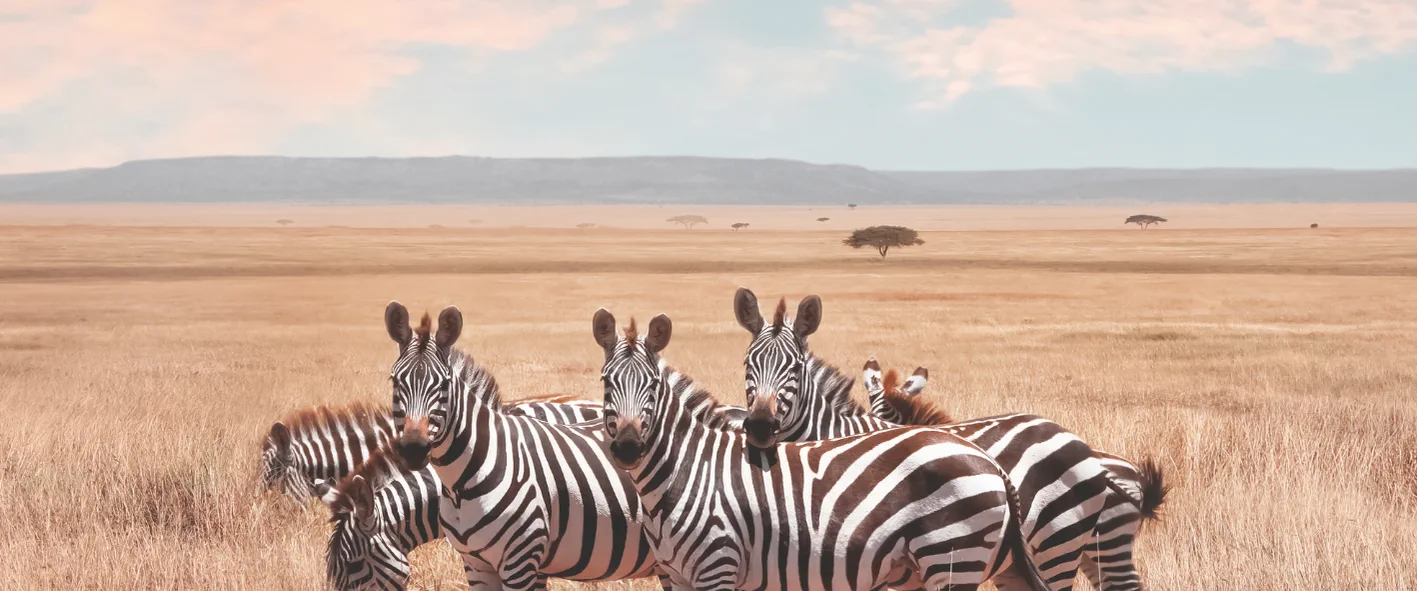
The private camp at dawn. The guide who reads the grass better than most people read a map. The morning a leopard walks through your camp at breakfast and no one moves.
Design your safari →A great safari is not a collection of animals ticked off a list. It is a relationship with a landscape — the way the light changes over the Serengeti in the hour before sunrise, the sound the bush makes when something large is moving through it, the silence that descends when a predator is near. We design safaris around the quality of the experience, not the quantity of sightings. The camps we choose are small and intimate, never more than twelve guests. The guides we work with are the ones other guides come to for advice. The routes we plan account for the season, the migration patterns, and the places the tourist vehicles don't reach. This is safari as it was always meant to be.
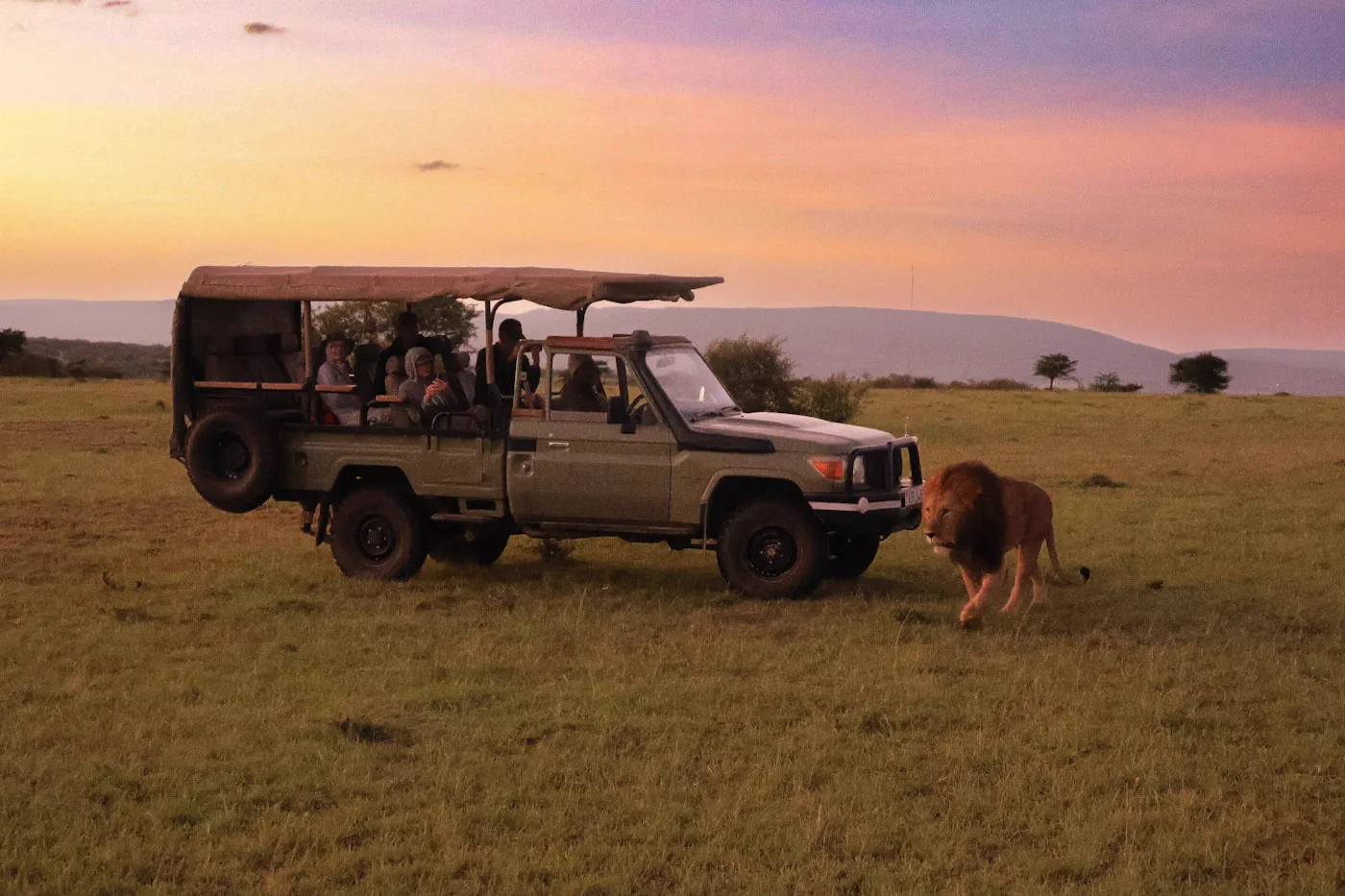
We select camps with fewer than twelve guests — properties where the staff know your name by the time you finish your first sundowner, where dinner is served around a communal fire and the conversation is as memorable as the game drive. Not the large resorts. The places that feel like a privilege to reach.
The guide is everything. Ours have tracked the same territories for decades — they know where the cheetahs den, which waterhole the elephants prefer in the dry season, and how to read silence. A morning drive with an exceptional guide is a masterclass in attention.
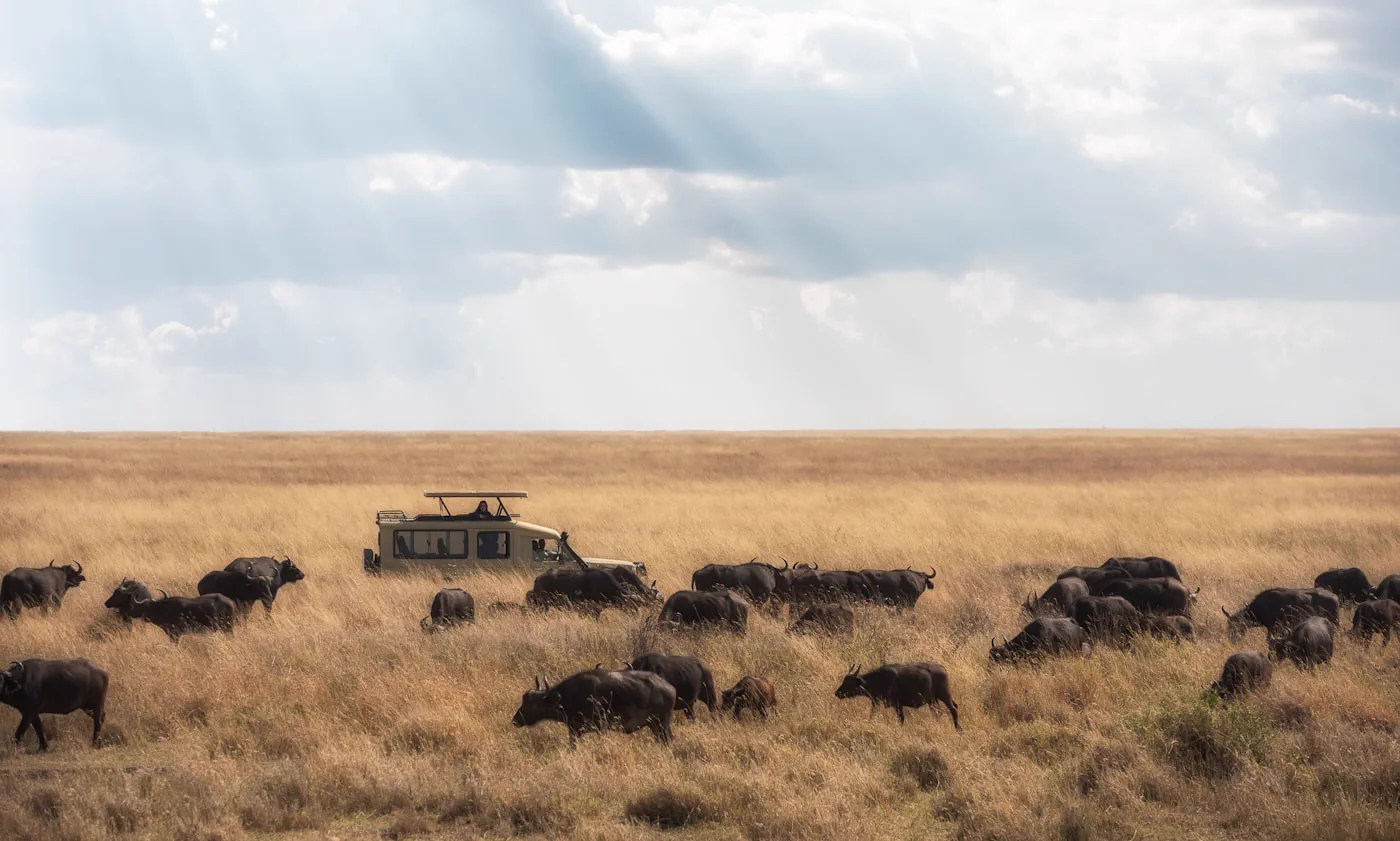
We use camps with private conservancy access — meaning your vehicle is the only one in an area that may be larger than some European countries. No convoys at a lion kill. No fifteen Land Cruisers around a cheetah. Just you, the guide, and whatever the bush decides to show you.
We combine ecosystems — Serengeti plains, Ngorongoro Crater, Okavango Delta, Namibian desert — so that each day offers something fundamentally different. A safari designed across two or three regions is twice the experience of one that stays in place.
Our most-requested safari circuit — beginning in the Serengeti, crossing to the Ngorongoro Crater, and ending on the Kenyan Laikipia plateau where the elephants outnumber the guests by several thousand to one.
Your camp is in the northern Serengeti, positioned for the wildebeest corridor in July and August. You are awake at 5:30 — not because you must be, but because the light at that hour makes everything else seem unnecessary. The driver has already started the engine. The thermos is filled. Nothing has been left to chance.
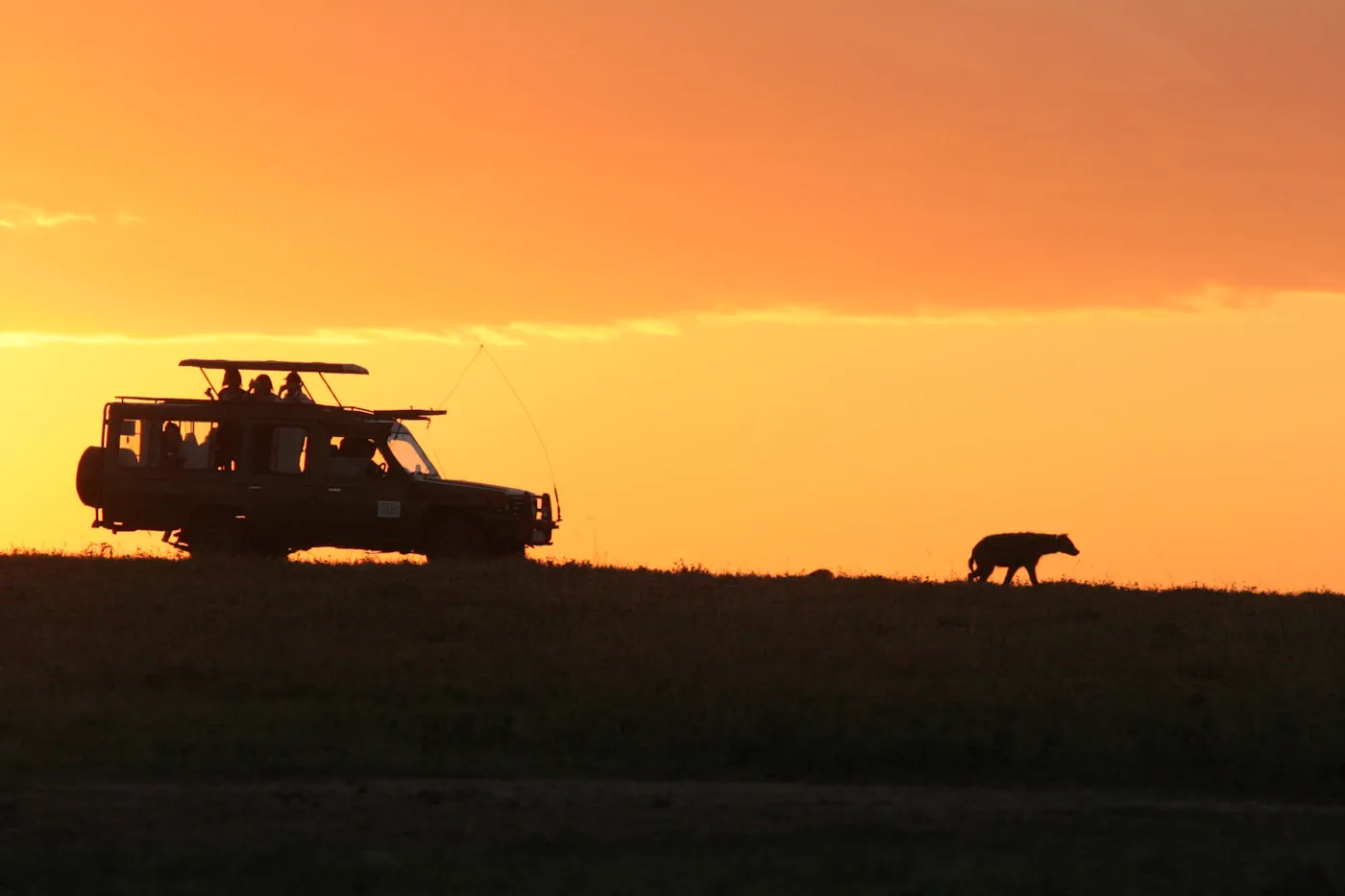
The Ngorongoro Crater — 260 square kilometres of compressed Africa, where 25,000 animals live within the same ancient caldera. You descend at sunrise. By 9am, you have seen lions, elephants, black rhino, and a family of hyenas feeding on a wildebeest. Your guide is explaining the geology while the dust settles around you.
A bush plane to northern Kenya. The landscape changes completely — drier, more dramatic, the colour of terracotta in the afternoon sun. Your camp here has twelve tents and 200,000 acres of private conservancy. The night game drives operate here in ways they cannot in the national parks. You see things after dark that most safari-goers never see at all.
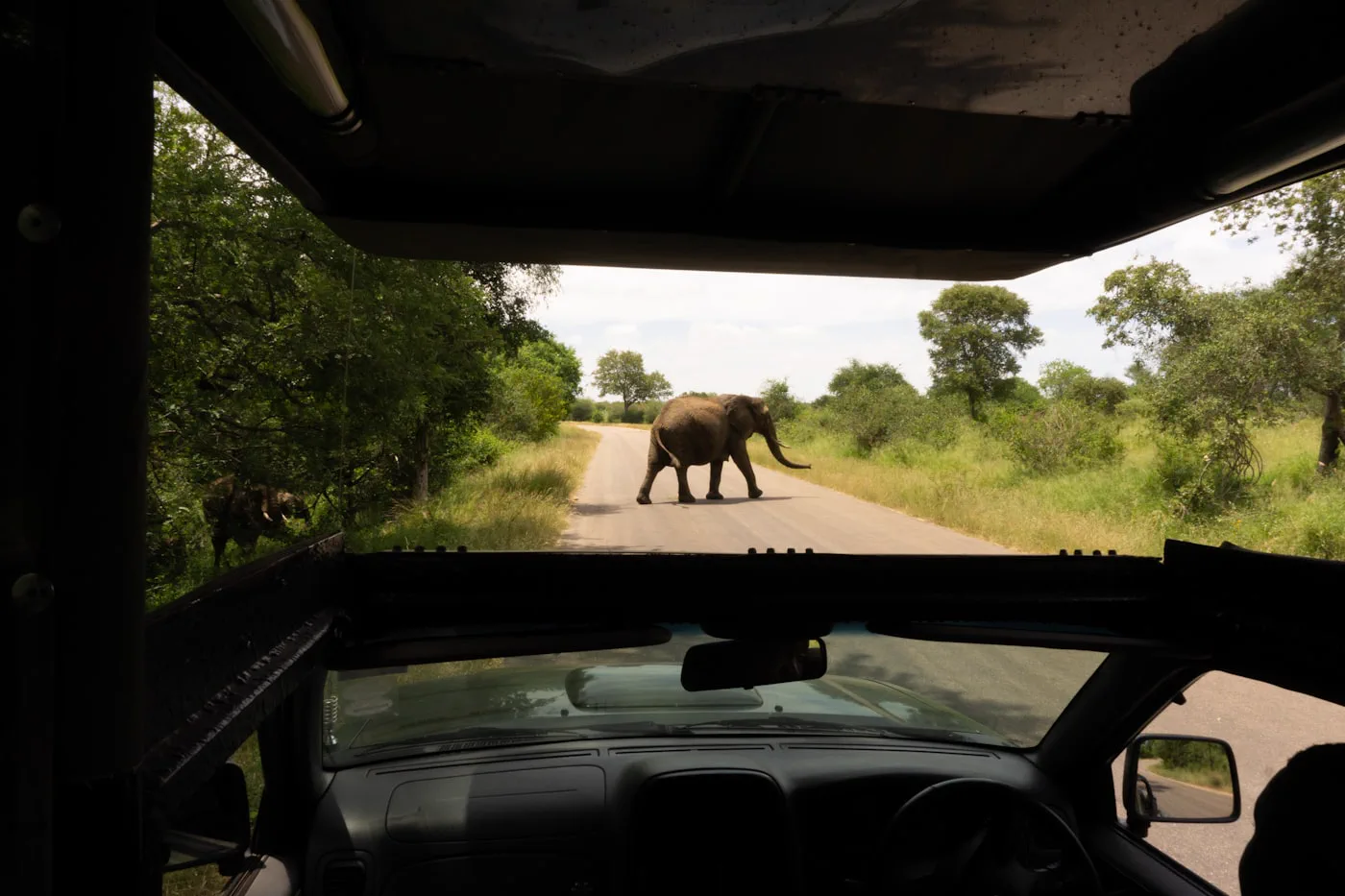
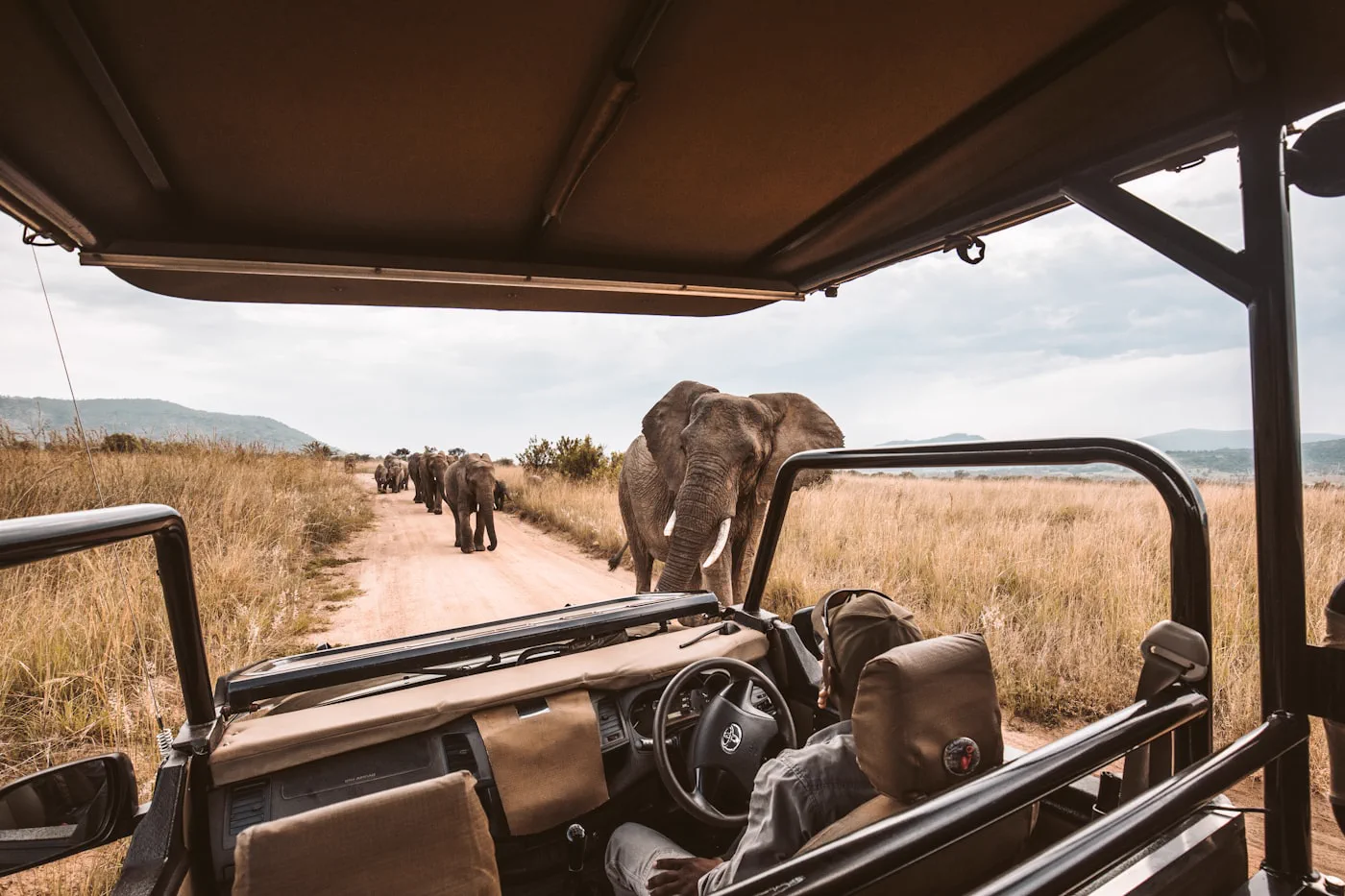
Your final drive ends on foot — a two-hour walking safari with an armed ranger and a tracker who grew up on this land. At one point, you are thirty metres from a herd of elephant, downwind, completely still. When you return to camp, there is nothing adequate to say about what just happened. You drink your coffee and watch the plain.


Tell us where you want to go and when — and we will design the Africa that stays with you long after you've come home.
Begin your journey