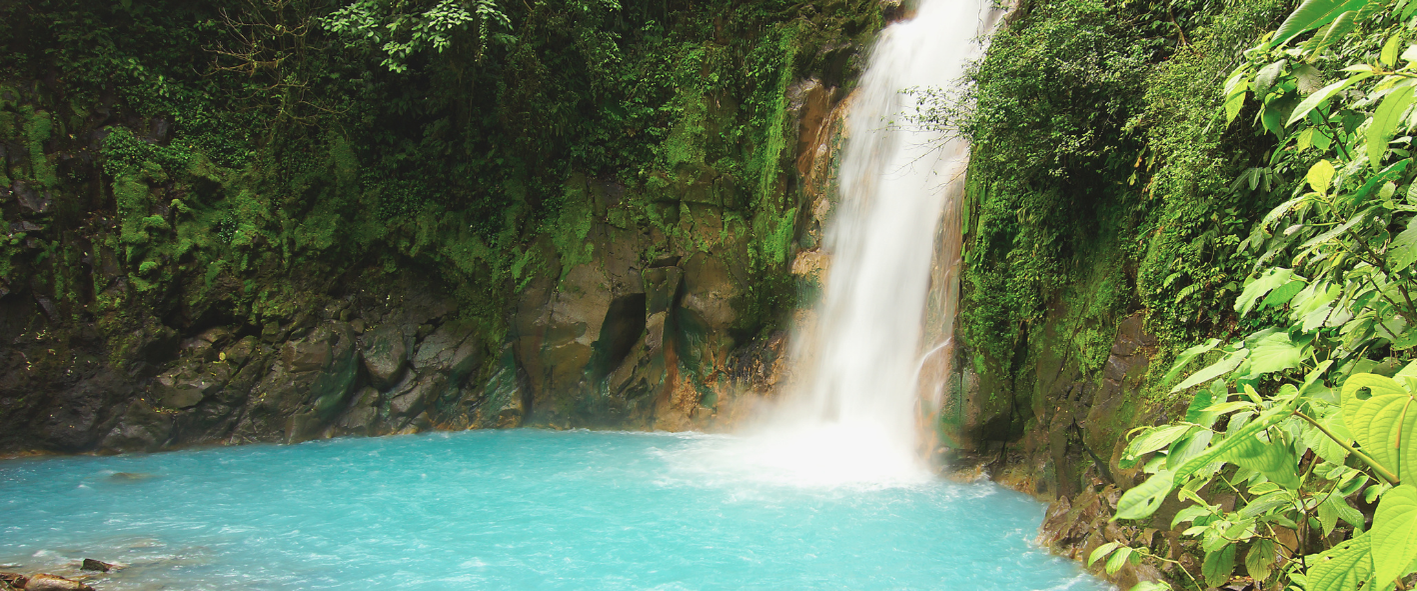
Arenal's thermal springs in the dark with the volcano above you. Monteverde's cloud forest at 5 a.m. with a birder who knows which trees the resplendent quetzal uses this week. The Osa Peninsula: the last jaguar territory on the Pacific coast of Central America.
Design your Costa Rica journey →Costa Rica abolished its military in 1948 and redirected the defence budget toward education and conservation — a decision that, seventy years later, has resulted in a country where twenty-six percent of the land is protected and biodiversity density rivals anywhere on Earth. This is not accident or rhetoric; it is the consequence of a specific political choice, and the forests and wildlife that travellers encounter today are its direct inheritance. What this means in practice is that Costa Rica's wild spaces are among the most accessible on the planet — but accessible on nature's terms, not the visitor's. The Monteverde cloud forest is at its most extraordinary at 5 a.m. when the mist is still in the canopy and the quetzal males are on their display branches; the Osa Peninsula's Corcovado National Park receives only 80 permitted visitors per day, and the jaguar has not read the tourism brochure.
The thermal springs fed by Arenal Volcano are most extraordinary after 9 p.m., when the tour groups have returned to La Fortuna and the pools are nearly empty. We arrange access to a small private thermal complex on the forested flanks of the volcano — four pools at different temperatures, fed by a natural hot spring, set in secondary forest where the night sounds (howler monkeys, frogs, the distant rumble of the cone) are the backdrop. A night walk with the lodge's naturalist through the garden afterward targets poison dart frogs and the spectacled owl that hunts the property edges.
The resplendent quetzal requires cloud forest at 1,500 metres and a birder who has spent enough time in the Monteverde zone to know which specific aguacatillo trees are fruiting this week — the bird follows the fruit, not a schedule. Our guide has been leading quetzal walks in Monteverde for eighteen years and maintains a network of local contacts who update him daily on sightings. You leave the lodge at 5:15 a.m. and are at the first watch point before first light. The male quetzal's tail feathers, which extend sixty centimetres beyond the body, are best seen when the bird launches into flight against the cloud.
Corcovado National Park on the Osa Peninsula is one of the most biologically intense places in the Western Hemisphere — eighty species of mammals, 400 bird species, and the last Pacific coast jaguar population in Central America, all within a park that limits daily visitors to 80 people across two entry stations. We secure the first-entry permit for the Los Patos station, which provides the quietest conditions for wildlife — tapir, white-lipped peccary, and scarlet macaw are common on the trail; the jaguar is present but private. Overnight at a lodge at the forest edge, where the sound of the rainforest at night is genuinely loud.
Arenal and Monteverde in the north, then the Osa Peninsula and a Pacific surf camp in the south. Best December through April in the dry season when trails are passable and wildlife concentrations peak.
Arrive San José and transfer to the Arenal basin. Three nights at a lodge with volcano views. Day one: morning kayak on Lake Arenal with scarlet macaws in the trees along the shore. Evening: private thermal springs session at the forest complex. Day two: morning hike on the 1968 lava flow trail with a volcanologist guide. Evening: night walk for frogs and nocturnal mammals.
Transfer to Monteverde by 4WD via the Lake Arenal road. Three nights at a lodge at the forest edge. Pre-dawn quetzal walk on day one. Afternoon at a small sloth sanctuary where two- and three-toed sloths recovering from injuries are cared for — the biologist explains the difference between the two species and their distinct ecologies. Day three: suspended bridge canopy walk through the Santa Elena Reserve at 7 a.m.
Light aircraft from San José to Drake Bay. Three nights at a jungle lodge accessible only by boat. Day one: Corcovado first permit at Los Patos station — full day in primary rainforest with a park guide. Day two: snorkelling on the outer reef of Isla del Caño, where white-tip reef sharks and manta rays are regular. Day three: river boat through the mangroves of the Sierpe estuary — American crocodile, boat-billed heron, and tiger herons.
Transfer to the Pacific coast south of Dominical, where a small private surf camp operates on a stretch of beach without road access. Two nights: morning surf sessions with a local instructor, afternoon board shaping lesson, evening with the camp's cook — fresh ceviche and tuna caught offshore that day.
Transfer to San José for international departures. We arrange a final morning at a small urban sloth sanctuary near the airport for travellers with time between check-out and flight.
A country that protected its wild places before they were gone — you reap the consequence of that foresight every morning on the trail.
Begin your journey