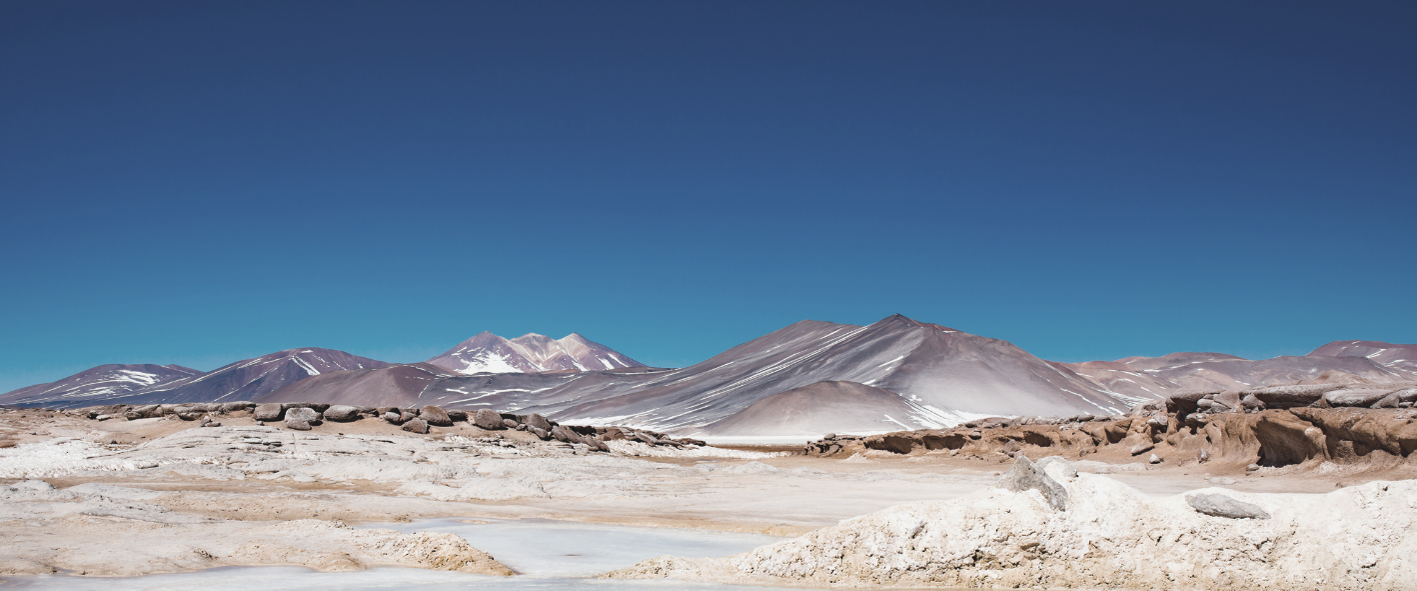
Private trekking camps below the Torres del Paine spires. The Atacama desert at 2,400 metres where the night sky is a scientific instrument. Chilean fjords on a private boat, and Easter Island before the tour vans arrive at Ahu Tongariki.
Design your Chile journey →Chile's geography is a deliberate provocation: a country 4,300 kilometres long and rarely more than 180 wide, squeezed between the Andes and the Pacific, running from the driest desert on Earth to the subpolar channels of Magallanes. What this means for the traveller is that each region demands a different pace and a different mind-set. The Atacama rewards stillness — the altiplano at dawn, flamingos at the salt flats of Salar de Atacama, and the extraordinary clarity of the Atacama sky where international observatories cluster for a reason. Torres del Paine demands a different alertness, an outdoor intelligence, an eye trained on the weather and the light. Between these extremes, the Colchagua Valley offers Carménère vineyards that produce wines unlike anything grown elsewhere, and the labyrinthine channels of Chilean Patagonia offer a boat journey through fjords still largely unmapped.
We place you at one of the small private lodges outside the park's main circuit — fewer than twenty guests, a private guide, and a programme built around the light rather than the schedule. The pre-dawn hike to Mirador Las Torres takes four hours; you arrive as the first sun catches the granite spires and turns them from grey to gold to copper in a sequence that lasts perhaps fifteen minutes. Your guide, who has made this walk over four hundred times, stops talking when it happens. So will you.
San Pedro de Atacama sits at 2,400 metres in one of the driest places on Earth, which is why the European Southern Observatory and the Atacama Large Millimeter Array are both within driving distance. We arrange an evening at a private observatory with an astronomer who works with the professional institutions — not a stargazing tour, but a private session where the telescope is calibrated for what you specifically want to see, and the conversation about dark matter is allowed to run as long as it needs to.
Rapa Nui receives a limited number of visitors daily, and the distribution of those visitors across the day is entirely a matter of logistics. We arrange the first permitted access to Ahu Tongariki — the platform of fifteen moai facing east — for the forty-five minutes before the tour vans from Hanga Roa arrive. With a local Rapa Nui cultural guide who traces her own genealogy to the statue-carving period, the site reads entirely differently than it does in a crowd. The guide's interpretation draws on oral tradition that the standard archaeology misses.
Santiago to San Pedro de Atacama, south to Torres del Paine and the fjords, with an optional Easter Island extension. Best October through April when Patagonian weather is most stable.
Arrive Santiago and transfer to the Colchagua Valley for a private Carménère tasting at a family-owned bodega — the grape was misidentified as Merlot for decades, and the winemaker tells that story with a certain pleasure. Overnight at a vineyard guest house on the valley floor.
Fly north to Calama and transfer to San Pedro de Atacama. Three nights: morning at Salar de Atacama watching flamingos at the lagoons, afternoon in the Valle de la Luna for the salt formations, and one private evening at a high-altitude observatory with a working astronomer.
Fly to Punta Arenas and transfer by private vehicle to Torres del Paine. Five nights at a lodge on the park's southern edge with a private guide. Programme includes the pre-dawn hike to Mirador Las Torres, a full day at Grey Glacier by kayak, and an evening walk in the Valle del Francés where condors roost on the thermals.
Board a private vessel in Puerto Natales for a two-night journey through the Última Esperanza Sound and into the Seno Eberhard fjord. The boat's naturalist identifies Magellanic penguins and black-necked swans at close range; the cook prepares congrio and centolla (king crab) caught the same morning. Navigation ends at Puerto Montt or Puerto Varas.
Fly from Santiago to Mataveri International Airport on Rapa Nui. First-light access to Ahu Tongariki with a Rapa Nui cultural guide, afternoon at the Rano Raraku quarry where unfinished moai are still embedded in the hillside, and a sunset at Ahu Tahai. Return to Santiago for international connections.
From the driest desert on Earth to a remote island with no context in the Pacific — Chile rewards those who take the full measure of it.
Begin your journey