The Pantanal: the highest concentration of jaguars on Earth, visible in daylight from a boat on the Cuiabá River. The Amazon: a private riverboat lodge where the forest begins fifty metres from your cabin window. Iguazú: a helicopter at first light, before the falls have an audience.
Design your Brazil journey →Brazil is the fifth-largest country on Earth and contains more biodiversity within its borders than any other nation — a fact that becomes physically apparent when you move between its ecosystems. The Amazon Basin covers sixty percent of the country and is a world unto itself; the Pantanal, the world's largest tropical wetland, floods annually to create a landscape where wildlife has nowhere to hide; Fernando de Noronha is a volcanic archipelago in the South Atlantic with a marine sanctuary so rigidly protected that its reef system is among the healthiest in the hemisphere. The challenge of designing Brazil well is not finding the experiences — they are all extraordinary — but sequencing them so that each has room to be itself. We do not try to show you everything; we try to show you three or four things with the depth they deserve, and leave the rest for next time.
The northern Pantanal, centred on the Porto Jofre area of the Cuiabá River system, has become the world's premier location for jaguar observation — the annual flood cycle concentrates prey species on the riverbanks, and the jaguars follow. A skiff with a maximum of four passengers and a specialist naturalist guide moves quietly along the riverside forest edges at dawn and dusk, when jaguars patrol their territories. Sightings at two to fifteen metres are routine in the July to October season; the guides radio each other across the network to share locations. We book you into Cristalino Lodge, which combines Pantanal access with one of the most sophisticated birding operations in South America.
Cristalino Lodge, accessible by boat on the Cristalino River in southern Amazonas, sits within a private reserve contiguous with Cristalino State Park — a total protected area of over 180,000 hectares. The lodge runs guided canopy tower walks (towers rising 45 metres above the forest floor) at dawn, when the bird activity peaks and the mist is still in the upper canopy. Night excursions by canoe along the black-water creeks target caimans, giant river otters, and the occasional tapir on the banks. Butterfly and moth light-trapping sessions with the lodge's entomologist continue after dinner.
The Iguazú helicopter operates from the Brazilian side helipad and provides the only way to see the full geometry of 275 individual falls simultaneously. We book the first departure of the day — 7:30 a.m. — when the light is low and the mist from the Devil's Throat is backlit by the early sun. The flight lasts ten minutes and covers the full arc; the Argentine and Brazilian sides are visible in a single view from altitude. The rest of the day on the Argentine walkways gives ground-level context: the Garganta del Diablo up close, the movement of the water, the sound that the altitude shot cannot convey.
Amazon lodge, then Pantanal jaguar season, Iguazú, and Rio. Best July through October for Pantanal jaguars and Amazon dry season; May through October for Iguazú peak flow.
Fly to Alta Floresta and transfer by boat to Cristalino Lodge. Four nights: dawn canopy tower sessions, night canoe on the black-water creek, giant river otter family morning on the main river, and a half-day with the lodge's entomologist at the moth light-trap. No itinerary pressure — the Amazon operates on its own time.
Fly to Cuiabá and transfer south to Porto Jofre on the Cuiabá River. Four nights at a riverside lodge, with morning and evening skiff sessions on the jaguar territory. Ancillary wildlife on the river system: giant anteater, tapir, capybara, hyacinth macaw, and 600-odd bird species. The jaguar sighting probability from a dedicated guide in peak season exceeds ninety percent.
Fly to Foz do Iguaçu. Day one: helicopter at 7:30 a.m. then Brazilian-side walkway for the panoramic view. Day two: Argentine side — the Superior and Lower Circuit walkways, the Garganta del Diablo close-up boat ride, and the National Park Atlantic Forest trail at dusk for toucans and coatis. One night on each side.
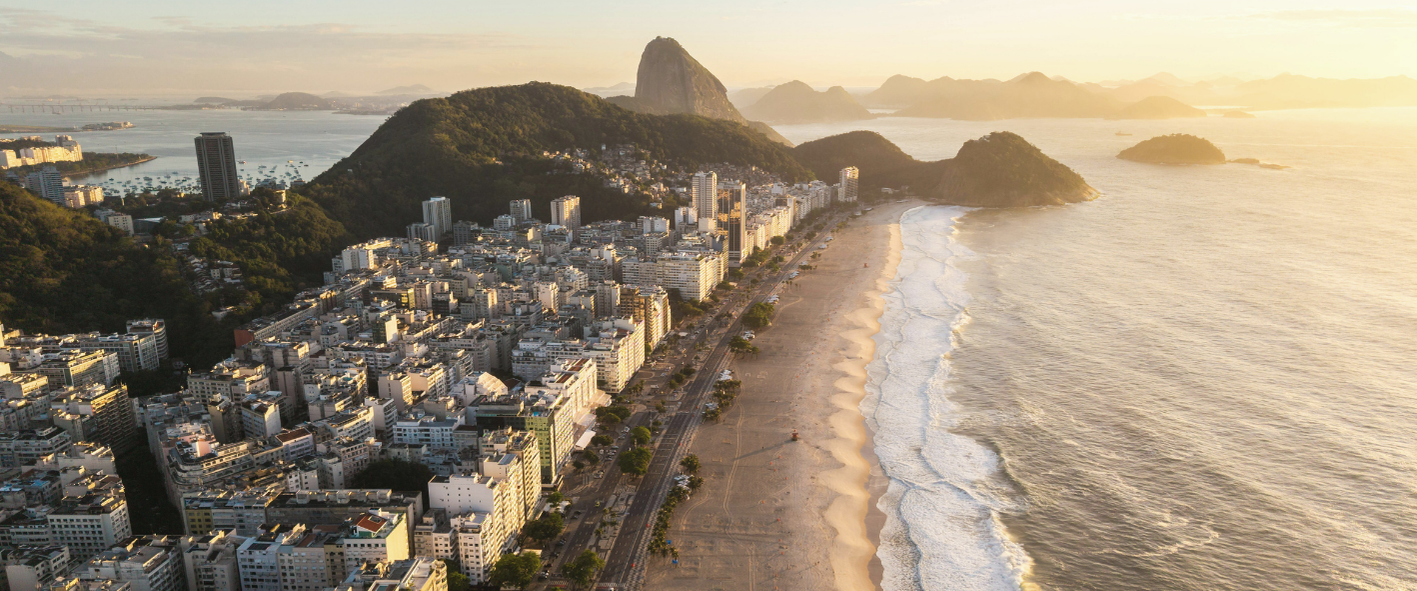
Fly to Rio. Three nights in a private residence in Santa Teresa — a hillside neighbourhood of art studios and converted mansions above the city. Morning hike up Corcovado through the Tijuca Forest (not the tourist train) with a city historian. Evening in the Lapa neighbourhood for live forró and choro. One dinner arranged with a chef who works the Mercado São Sebastião.
Two-hour flight from Recife to Fernando de Noronha archipelago. The marine park limits visitors strictly; snorkelling at Baía do Sancho, rated among the world's top dive sites, reveals spinner dolphin, sea turtle, and reef shark in water of unusual clarity. Return to Recife or Rio for international connections.
A jaguar on the Cuiabá riverbank at five metres, the Amazon at 45 metres above the canopy, Iguazú from the air at 7:30 a.m. — the scale changes, the intensity does not.
Begin your journey