inspiring travel
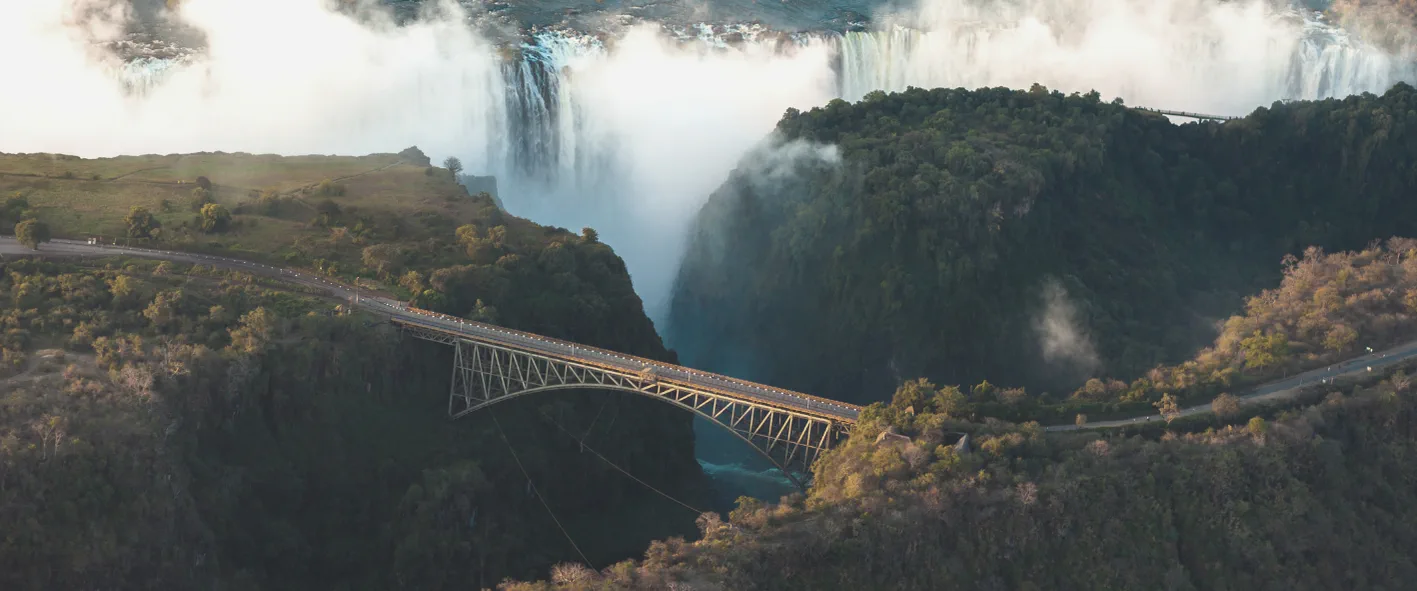
Victoria Falls seen from the Zimbabwean Knife Edge bridge, full width of the falls in spray and afternoon light
Southern Africa · Zimbabwe

Elephants, falls, and
ten thousand years of painting

Zimbabwe's wildlife recovery story is one of Africa's most encouraging: Hwange National Park now supports the continent's largest elephant population, the guiding culture is exceptional, and the country's relatively low visitor numbers mean that even the most famous sites carry an unhurried quality that more heavily touristed destinations have lost.

Design your Zimbabwe journey →
Scroll

Zimbabwe has been unfairly overlooked by international travellers for two decades, and the irony is that this neglect has inadvertently preserved something remarkable: a safari culture with the same guiding philosophy and personal scale that the region had in the 1980s, before visitor numbers transformed the eastern African safari into a production line. Hwange National Park, covering 14,651 square kilometres of Kalahari sandveld in the northwest, holds an elephant population of around 40,000 — the largest single concentration on Earth, concentrated at artificial waterholes during the dry season in numbers that are genuinely difficult to process. Matobo National Park in the southwest is a landscape of granite kopjes and balanced boulders that shelters one of the highest densities of cave paintings anywhere in Africa — San rock art spanning from 13,000 years ago to the 19th century, painted in shelters that the Ndebele people still regard as sacred. The Zambezi River below Victoria Falls, navigated by canoe through Mana Pools National Park, offers the most intimate large mammal encounter in Africa at water level. Zimbabwe's guides, formed in a tradition that prizes ecological literacy over entertainment, are consistently rated by experienced safari travellers as the continent's finest.

Signature experiences

How we design
your Zimbabwe

A herd of several hundred elephants gathered at a Hwange waterhole in the dry season
Wildlife

Hwange — elephant herds at the dry season waterholes

Hwange's artificial waterholes are pumped by solar-powered boreholes and visited by elephants in aggregations that peak between August and October. Arriving at a waterhole at midday in September, when the temperature reaches 38°C, you may find four hundred elephants at a single waterhole — family groups jostling for access, bulls pushing adolescents aside, calves disappearing entirely under the surface. Hwange's private concessions — Wilderness Safaris' Davison's Camp and Linkwasha, John's Camp in the Linkwasha concession — operate within exclusive areas of the park with no day visitors and guiding that covers walking, night drives, and the hide-based waterhole observations that produce the most intimate footage. Wild dog is Hwange's other defining sighting: the pack size here frequently exceeds thirty animals.

San rock painting of eland and human figures in a granite rock shelter in Matobo National Park
Heritage

Matobo Hills — walking to the San paintings

The Matobo Hills are an ancient granite landscape of balancing rocks and boulder-filled valleys covering 3,100 square kilometres south of Bulawayo. The San people painted in its rock shelters for over 13,000 years — images of eland, kudu, and therianthropes (human-animal figures associated with trance states) in red ochre and white clay that survive in extraordinary clarity in shelters protected from the rain by overhanging rock. A walking tour with a specialist guide who has trained with NMMBA (National Museums and Monuments) leads to six to eight sites across a half-day; the concentration of painted shelters within walking distance of Nswatugi and Pomongwe is genuinely unparalleled. The grave of Cecil Rhodes at World's View is a short walk from the painting circuits and provides its own complicated historical conversation.

Canoe on the Zambezi at first light with elephant on the far bank and papyrus reeds in the foreground
Adventure

Mana Pools — canoe safari on the Zambezi

Mana Pools National Park in northern Zimbabwe is one of only two national parks in Africa where walking without a guide is legally permitted — a policy that reflects both the quality of the terrain and the confidence placed in an informed visitor. The multi-day canoe safari that begins at Chirundu and moves downstream through Mana's riverine forests arrives at campsites where elephant, buffalo, and lion cross the beaches at night. The canoes are Canadian-style open boats; the crocodiles are large and numerous. A Zimbabwe-licensed professional guide accompanies all canoe groups and manages the considerable wildlife interactions with the combination of experience and restraint that defines the Zimbabwean guiding tradition.

A suggested journey

11 days
between the falls and the ancient stone

This route moves from Victoria Falls through Hwange's elephant country to the Matobo Hills cave paintings and back north for the Zambezi canoe. Best travelled June to October — the dry season concentrates game at Hwange's waterholes, makes Mana Pools canoeing optimal, and keeps the Matobo walking comfortable in the southern winter sun.

Day 1–2

Victoria Falls — Knife Edge, spray walks, Zambezi sunset

The Zimbabwean viewing path at Victoria Falls is the most comprehensive of any on either bank — a series of viewpoints from Main Falls through the Knife Edge bridge over the Boiling Pot gives the full 1.7 kilometres of the falls' width. At peak flow, the mist makes midday visits somewhat watery; the dry season's lower flow exposes basalt formations and allows the Devil's Pool swim from the Zambian side if you choose a combined crossing. The Zambezi above the falls at sunset, from a boat with a bottle of wine, is one of the more civilised ways to end an African evening.

Day 3–5

Hwange National Park — waterhole hides, walking, wild dog

A short drive east to Hwange's private concession camps. Three days: morning walks with a professional guide across the sandveld tracking the overnight movement, midday in a waterhole hide where the action intensifies as the heat peaks, and evening drives that extend into a night with a spotlight for the leopard and honey badger that move after dark. The wild dog packs are typically located by radio-collared individuals and the sightings, in September particularly, are extended and spectacular as the pack's pups learn to run with the adults.

Day 6–7

Matobo Hills — cave paintings, rhino tracking, World's View

A charter flight south to Bulawayo and a transfer to the Matobo Hills. Day six is devoted to cave painting sites — six shelters across the hills, each different in subject matter and technique, with the specialist guide providing paleoanthropological context on San cosmology and the trance-state journey that the therianthrope figures represent. Day seven focuses on Matobo's white rhino population — one of the most concentrated in Africa — tracked on foot across the boulder-filled valleys with a rhino monitor.

Day 8–10

Mana Pools — canoe safari, walking on the floodplain

Flight north to Kariba, then a transfer to the Zambezi for the two-night canoe safari downstream through Mana Pools. Mornings on the water, afternoons in camp where the fig trees draw browsing elephant to within metres, evenings listening to the river. On the final morning of Mana, the walk along the floodplain under the tented canopy of albida acacias — where elephants stand on their hind legs to reach seed pods five metres up — is the definitive Mana Pools image and the one that makes the journey's endpoint feel genuinely complete.

Day 11

Harare — departure connections

Charter flight to Harare for international connections. Harare's Avondale neighbourhood has good restaurants and galleries for a final evening; the National Gallery of Zimbabwe on Julius Nyerere Way holds a collection of Shona stone sculpture that represents one of the continent's most significant post-independence art movements and deserves two hours before departure.

Your Zimbabwe story
begins here.

Zimbabwe's guides are the best in Africa and its wilderness among the least crowded — we connect you with both, and design the journey around what the country does incomparably well.

Begin your journey