Thailand's gift to the patient traveller is that it never entirely gives itself away. The Bangkok of the canal markets at five in the morning, the Chiang Mai of the forest elephant sanctuaries, the Andaman coast seen from a private villa at low tide — these are all the same country and yet feel like separate worlds.
Design your Thailand journey →Bangkok at dawn is a different city from Bangkok at noon. The khlongs — Bangkok's original arteries, now half-forgotten beneath the expressway network — still carry a morning market that arrives by boat, and the private long-tail that navigates them at five in the morning carries you through a Bangkok that has been running on its own rules since before tourism existed. Chiang Mai, in the northern mountains, is where the country's relationship with its elephants is being carefully renegotiated: the sanctuaries we work with have ended riding entirely and replaced it with mud bathing, forest walks, and the particular experience of feeding a four-tonne animal from your palm and watching it decide whether you are trustworthy. The south — Koh Lanta, Rai Leh, the Trang archipelago — belongs to a different sensibility: the Andaman Sea in the November-to-April dry season, limestone cliffs dropping straight into clear water, and a private villa on stilts above the tide where the sound of the ocean at night is the only alarm clock that matters.
The sanctuary we partner with in the Mae Taeng Valley north of Chiang Mai operates on a simple principle: the elephants choose what they do each day. No hooks, no riding, no shows. Guests join the mahouts on their morning forest walk, help prepare the four-hundred-kilogram daily fruit and vegetable feed, and wade into the mud pool where the elephants coat themselves in clay for sun protection. The herd of nine elephants ranges in age from three to sixty-two, and their personalities, once you spend a morning with them, are entirely distinct.
We arrange a private long-tail boat from the Tha Tien pier at five in the morning, navigating west along the Chao Phraya and turning into Khlong Bangkok Noi — the canal that once connected the capital to the western rice fields. The floating market stalls open as the sun rises, selling pad krapao and fresh coconut to the city workers on their way in. The Wat Arun appears from the canal side, its mosaic spire catching the first light, and the city feels briefly like its own previous self.
Royal Thai cuisine — the food developed over centuries for the Thai royal court — is a distinct tradition from restaurant Thai, defined by its complexity of preparation, its sculptural garnishes, and its careful balance of five flavours in every dish. We arrange a private half-day with a chef who trained in the palace kitchen system, working in a traditional Thai house in the Thonburi district. She teaches miang kham, laab pla, and the gold-thread dessert of foi thong — a recipe that requires exactly the patience and the wrist movement she will teach you, and that nobody has ever mastered on the first attempt.
This itinerary moves from Bangkok through Chiang Mai and finishes on the Andaman coast. November to April is the dry season across all three regions simultaneously — the ideal window for the complete journey.
Arrive into Suvarnabhumi and transfer to a Chao Phraya riverside hotel. Pre-dawn canal charter on day two, followed by Wat Pho and the Grand Palace complex in the early morning. Private royal Thai cooking class in Thonburi on day three, then an evening in the riverside bars of the Atsadang area where Bangkok's young architects and designers have been colonising old shophouses since 2018.
Morning flight north. Day four at the elephant sanctuary in Mae Taeng. Day five in Chiang Mai's old walled city — the Saturday Walking Street on Wualai Road, the meditation hall at Wat Suan Dok where monks hold open Q&A sessions in English on Tuesday evenings, dinner at the khantoke table service restaurant inside a 200-year-old teak house. Day six: private cycling tour through the rural villages of San Kamphaeng and the mulberry silk workshops.
Fly to Krabi and transfer by longtail to Koh Lanta's east coast. Three nights at a private villa on stilts above the mangrove — the sea visible from the outdoor bathroom, the sunrise over the Strait of Malacca visible from the bedroom. Day eight: private longtail to the Mu Ko Lanta marine park for snorkelling the reef at Hat Nui beach. Day nine at leisure.
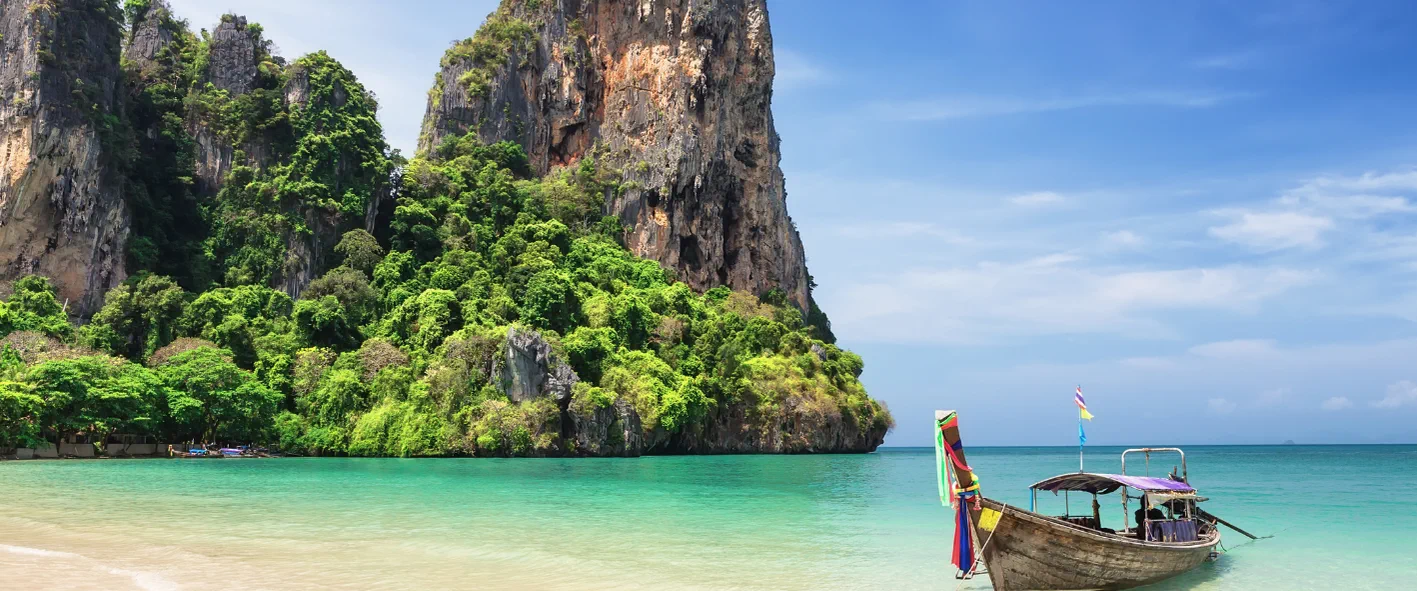
Private longtail to Rai Leh Beach — accessible only by boat, the limestone karst rising from the sea behind the sand. The beach at low tide reveals a sandbar that stretches several hundred metres, and the rock-climbing routes above it are among the best single-pitch limestone in Asia. Private kayak through the sea caves at Phra Nang Cave at dusk, then dinner at a cliff-edge restaurant above the bay.
Final morning on Koh Lanta or Krabi town, where the old town's wooden Chinese shophouses have been given a second life as excellent coffee shops and art galleries. Transfer to Krabi Airport for the Bangkok connection and international departure.
North or south, city or sea, elephants or cooking — tell us which Thailand calls to you and we will design the version that fits exactly how you like to travel.
Begin your journey