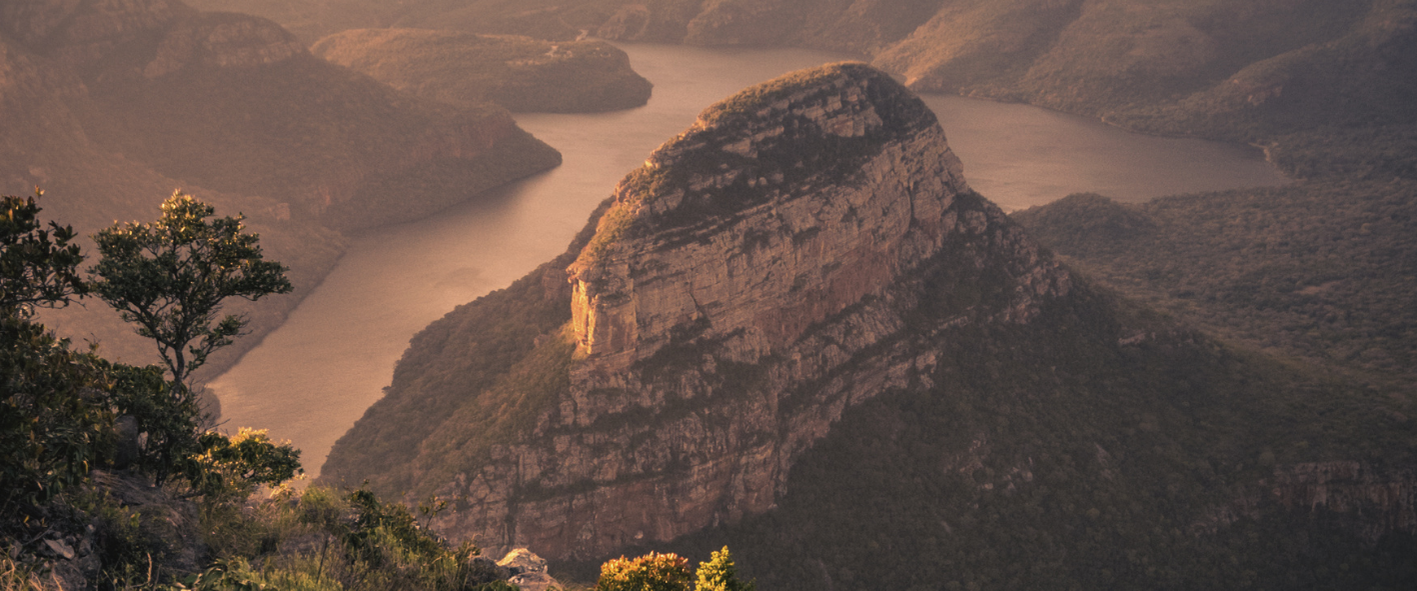
South Africa compresses an extraordinary range into a single itinerary: private game concessions bordering Kruger where Big Five sightings come without the safari convoy, Cape Town's architecture and ocean and table-flat mountain, and a winelands culture that rivals Burgundy in seriousness and leaves it comfortably behind in landscape.
Design your South Africa journey →South Africa is one of the world's most biologically diverse countries — three biomes meet at the Cape, the Kruger ecosystem supports a density of large mammals found almost nowhere else, and the fynbos of the Western Cape contains more plant species per square kilometre than the Amazon rainforest. It is also a country navigating a complex social transformation in real time, and the most honest South Africa journeys engage with that rather than looking away from it. The private concessions bordering Kruger National Park — Sabi Sand, Timbavati, Klaserie — offer something the national park itself cannot: the ability to walk on foot through lion country with a rifle-carrying field guide who has spent twenty years learning to read the Lowveld's sign. Cape Town, meanwhile, has built a restaurant, design, and wine culture that would be remarkable in any European city; positioned beneath Table Mountain with two oceans meeting at the Cape of Good Hope, it is simply one of the world's great cities to spend a week in.
The private concessions bordering Kruger operate with a maximum of two vehicles per sighting, no opening hours, and the ability to leave the vehicle and track on foot — none of which is possible in the national park itself. Sabi Sand, in particular, has habituated leopard populations that are almost reliably located during evening drives; the leopard density per square kilometre here is arguably the highest on the continent. A private camp with eight guests maximum means your game drive vehicle never shares its sightings. Walking with a professional armed field guide across the Lowveld at dawn — when tracks are fresh and the guide reads the landscape's overnight history in sand and dew — is the experience that veteran safari travellers consistently say changed how they understand the bush.
The Stellenbosch, Franschhoek, and Hemel-en-Aarde valleys produce wines — particularly Chenin Blanc, Syrah, and Pinotage — that the international wine press has been taking increasingly seriously since the mid-2010s. We arrange private cellar tours and vertical tastings at estates that are not open to casual walk-ins: winemakers explaining their soil maps, their rainfall data, and the specific clonal decisions that went into a particular block. Lunch at The Restaurant at Babylonstoren, where the kitchen draws directly from the estate's two-hectare garden, is a recurring recommendation. The Hemel-en-Aarde Valley, producing some of South Africa's finest Pinot Noirs, is best visited as a full day with a specialist guide.
Between June and December, southern right whales enter Walker Bay at Hermanus to calve — the population has recovered from near-extinction to several thousand animals, and the bay's sheltered waters make Hermanus one of the world's best land-based whale watching locations. A cliffside walk above the bay during August or September frequently produces mother-and-calf pairs breaching at close range, while small-boat excursions from New Harbour bring you to within fifty metres of sleeping adults. We combine Hermanus with the nearby Elim historic village and the Cape Agulhas lighthouse at Africa's southernmost point.
This classic South Africa route combines a private Kruger concession safari with Cape Town, the Winelands, and the Whale Coast. For safari, May to September delivers the best wildlife concentrations in the dry season; Cape Town is excellent year-round with the Cape's famous south-easterly winds making October to February the most energetic season.
Four nights on a private concession bordering Kruger: two game drives daily (3am and again at 3pm), guided walking at dawn, and the night drive that reveals what moves after dark — civets, porcupines, nightjars, and occasionally the elusive aardvark. The camp manager typically knows which leopard family is denning nearby and which lion pride has been working a buffalo herd on the concession boundary. This is the information that makes the difference between a safari and an education.
A short flight to Cape Town International and a design hotel in the City Bowl or De Waterkant. Three days: the cable car to Table Mountain's summit (the Western Cape's fynbos flora is world-classified and the views to both coasts are definitive), the Bo-Kaap neighbourhood's Cape Malay culture and cooking class, and evenings at the restaurants in the Old Biscuit Mill at Woodstock or on Bree Street that have made Cape Town's food scene internationally competitive. A day trip to Cape Point combines the Cape of Good Hope with a colony of African penguins at Boulders Beach.
Two days in the Winelands: a morning at Babylonstoren in the Drakenstein Valley (estate walk, garden tour, cellar), lunch at their restaurant, then a private tasting at a Franschhoek producer in the afternoon. Day nine moves to the Hemel-en-Aarde Valley for Pinot Noir: Hamilton Russell Vineyards and Storm Wines represent the valley's two defining styles. The drive from Stellenbosch to Hermanus over the Houw Hoek mountains is itself a scenic argument for renting a car.
Two nights in Hermanus for the whales (June to December) or for the Overberg wildflower season (August to September, when the fynbos fields bloom in extraordinary density). A boat trip from New Harbour, the cliff walk, and a late afternoon drive to Cape Agulhas — where the Indian Ocean and Atlantic officially meet — complete the coastal chapter of the journey.
A final morning in Cape Town for any remaining gallery visits (Zeitz MOCAA on the V&A Waterfront is a strong argument for an early start), last coffee at Truth Roasting Company or Rosetta Roastery, and a midday departure from Cape Town International. South Africa's two-hour time difference from Central Europe means an overnight flight lands in Brussels or Amsterdam early the following morning.
South Africa rewards careful curation — the right concession, the right winemaker, the right timing for the whales — and that is precisely what we do.
Begin your journey