Slovenia is twenty kilometres from the Alps, twenty kilometres from the Adriatic, and twenty kilometres from the Pannonian plain — and manages to be fully itself in all three directions. Lake Bled before anyone else arrives. The Soča River in emerald silence. Lipizzaner horses at their morning work.
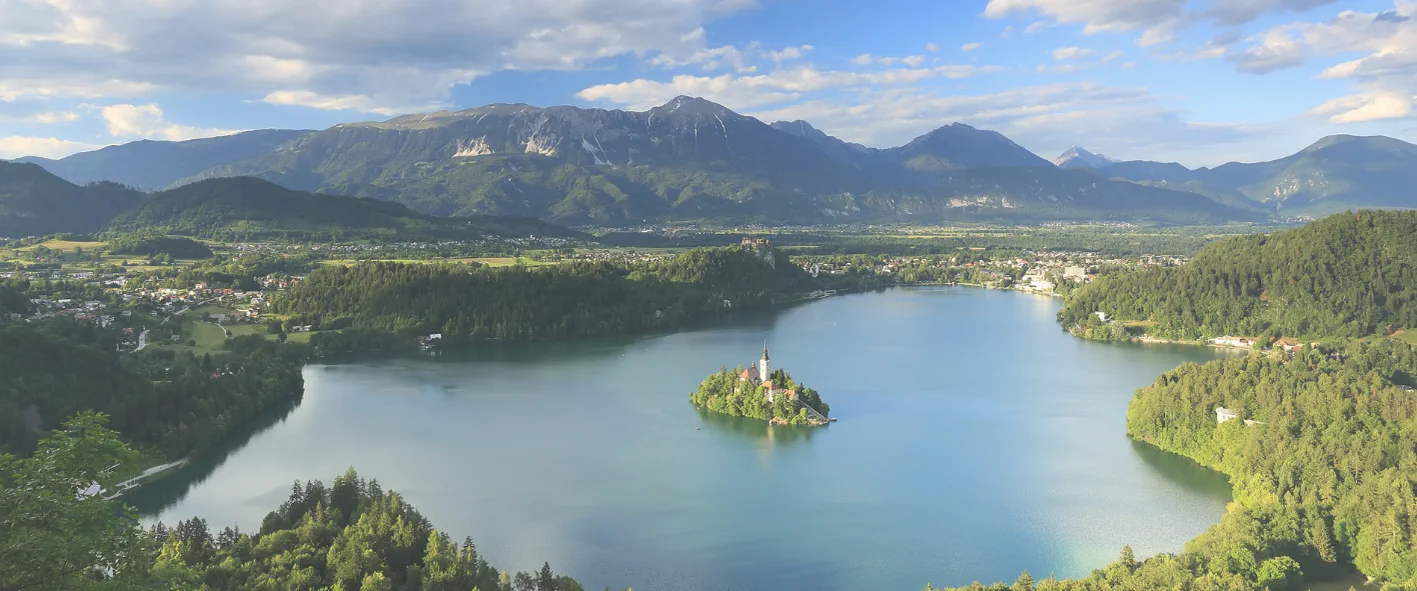
Design your Slovenia journey →Slovenia is the smallest country in Central Europe with an argument for being the most varied — and it has been making this argument without needing very many people to listen. Lake Bled, seen before 6am from a traditional Pletna — the flat-bottomed wooden rowboat that has been the lake's only transport for six centuries — with the island church reflected in still water and mist still on the Julian Alps, is an image of such composed beauty that it requires the absence of other tourists to fully register. The Soča River, running aquamarine through the Triglav National Park, contains one of Europe's last wild populations of marble trout — a species found only in this river system — and the fly-fishing here is as much an ecological encounter as a sport. The Lipica stud in the Karst region, where the Lipizzaner breed was developed in the 16th century for the Spanish Riding School in Vienna, still runs morning training sessions that the public is not invited to but we can arrange access to. And the Karst wine region, where Teran — a dark indigenous red made from Refošk grapes on iron-rich terra rossa soil — is produced in quantities too small for export, is known almost exclusively to those who have been taken there by someone who lives nearby.
The Pletna is a traditional flat-bottomed rowboat — the family licences to operate them on Lake Bled have passed from father to son since the 18th century, and there are currently twenty-three licensed boats on the lake. We arrange a private Pletna departure at 5:30am, arriving at the island church before any other boat has left the shore. The island church of the Assumption of Mary has been rebuilt seven times since the 8th century, and the acoustics of the nave, heard in absolute silence with the lake glass-flat outside, have a specific quality that the mid-morning visits — surrounded by tourist groups — make entirely inaccessible.
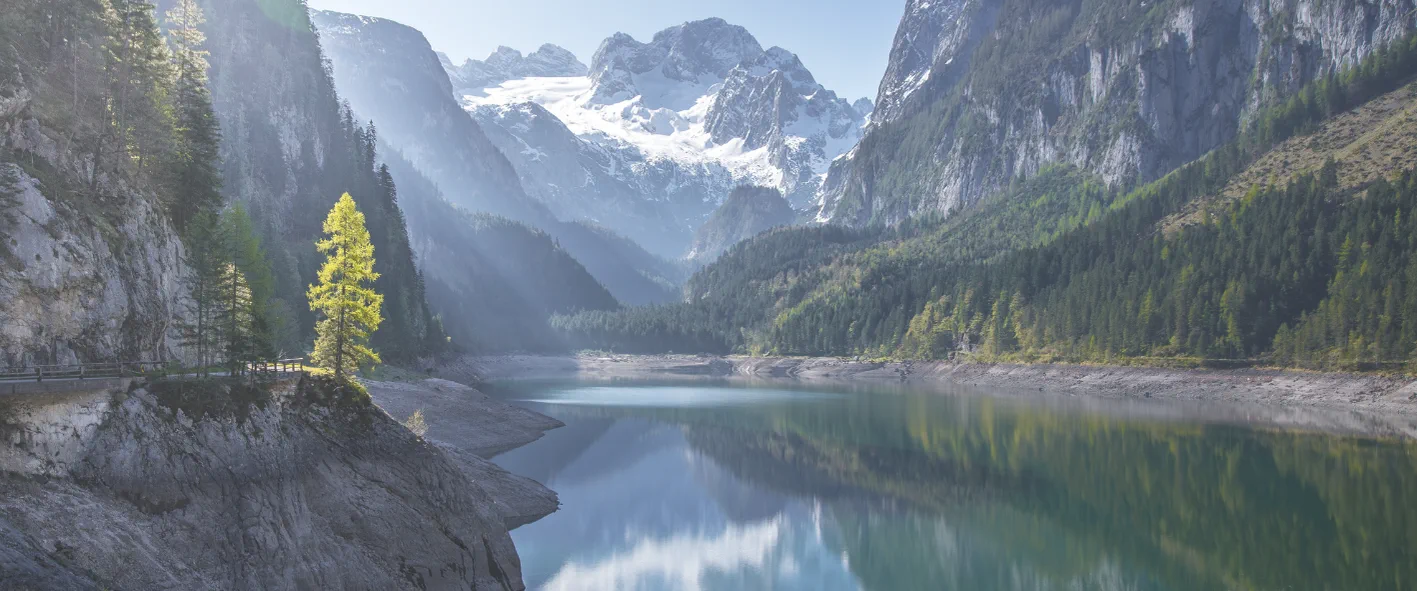
The Soča runs from its source in the Triglav National Park through the Trenta valley and the Bovec basin in a colour that is technically explained by glacial flour suspended in the water, but which seems in practice to be something else entirely — a particular blue-green that changes with the depth and the cloud cover and has no exact equivalent in any other river in Europe. The marble trout (Salmo marmoratus) is endemic to this watershed; catch-and-release fly-fishing on a private permit section with a licensed Slovenian guide produces the rare experience of fishing water that is both technically demanding and ecologically irreplaceable.
The Lipica stud was established in 1580 by the Archduke Charles II of Austria, who imported Spanish horses to the Karst limestone plateau to breed the horses for the Imperial court in Vienna. The stud still maintains the original Lipizzaner bloodlines — all six founding stallion lines — and conducts morning training sessions in the classical school that are not part of the public visit programme. We arrange access to the covered riding hall for an hour's private observation of the morning work, with the head trainer available to explain the individual horses and the specific exercises of the haute école.
A journey that moves from Lake Bled and the Julian Alps through the Soča valley and Ljubljana to the Karst region and Lipica. Best in May or June, when the Soča is running clear and full after snowmelt, the Bled roses are flowering, and the Ljubljana market is at its most seasonal.
Arrival and two nights near Lake Bled. Private Pletna at 5:30am on the first morning — the island church, the nave acoustics, the lake in silence. Afternoon hike to Vintgar Gorge, three kilometres of the Radovna river through carved limestone narrows. On the second day: the Triglav National Park's Pokljuka plateau with a botanist guide in June, when the high meadow wildflowers include species found nowhere else at this altitude in Central Europe.
Transfer west over the Vršič Pass — the highest pass in Slovenia, with 50 hairpin bends built by Russian prisoners of war in 1916 — to the Soča valley. Two days of fly-fishing on a private permit section of the upper Soča, with a licensed guide who has been fishing this water for fifteen years. Overnight in a farmhouse guesthouse in the Trenta valley where the owner's family has been farming the same 40 hectares since the 18th century.
Transfer to Ljubljana. Private morning at the Pogačar Square covered market with a Slovenian chef — the market that supplies Ljubljana's best restaurants, and where the producers drive in from the Karst and the Alpine valleys before 7am. Afternoon in the old town with an architectural historian who has documented Ljubljana's Art Nouveau heritage. Dinner at a restaurant in Krakovo neighbourhood that changes its menu every day based on what arrived at the market that morning.
Transfer south to the Karst. Private morning training session at the Lipica stud with the head trainer. Afternoon at a Teran producer in the Karst wine region — the terra rossa soil, the Refošk grape, the dark tannic wine that the Venetians prized and the Habsburgs drank at court. An evening in the village of Štanjel, a hilltop Karst village that was almost entirely destroyed in the First World War and rebuilt stone by stone in the 1920s.
Final morning at Postojna Cave — the 24-kilometre cave system that contains the world's largest underground concert hall and the olm (Proteus anguinus), a blind cave salamander that lives for 100 years and has not changed in 40 million years. Private early entry at 8am, before the tours begin, with a cave biologist who works on the olm population monitoring programme. Departure from Ljubljana.
Slovenia is a country that has had the great good fortune to be overlooked — and for those who find it before the majority do, the reward is a place still entirely and honestly itself.
Begin your journey