inspiring travel
Wahiba Sands desert dunes at night with the Milky Way overhead and a Bedouin camp fire below
Middle East · Oman

The Arabia that endures —
unhurried, generous, and real

Oman sits apart from its Gulf neighbours with a grace that has nothing to prove. Ancient forts rise from the Hajar Mountains, frankincense trees still grow wild in Dhofar, and the Wahiba Sands produce a silence at night that no city dweller has ever quite prepared themselves for.

Design your Oman journey →
Scroll

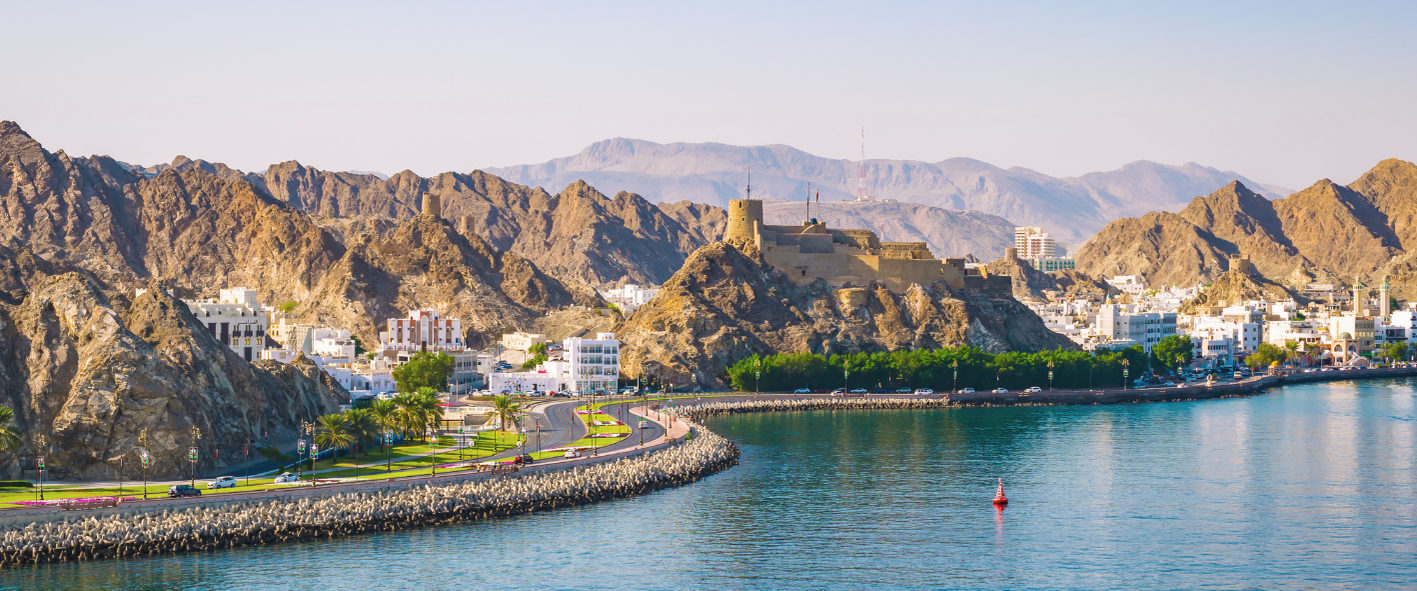
Oman moves at a different pace to the rest of the Arabian Peninsula — slower, more confident, less interested in impressing. The Muttrah Corniche at dawn, when the fish market is in full noise and the incense smoke from the Mutrah Souk hangs over the waterfront, is worth arriving early for. The Wahiba Sands, a private sea of red-orange dunes that stretches from the Hajar Mountains to the Arabian Sea, offers one of the finest dark-sky experiences on earth — the Milky Way overhead so dense it casts a faint shadow on the sand. The wadi system that cuts through the limestone of the Hajars holds swimming holes of a colour — a turquoise so cold and clean it looks digitally enhanced — that convinces travellers they have hallucinated. Jebel Akhdar, the Green Mountain at 2,000 metres, produces the Damask roses that have supplied the world's finest rose water for centuries, and in March and April the harvest is done by hand, family by family, in rose gardens that cling to terraced cliffs. We know the farmer who will walk you through his while the picking is underway.

Signature experiences

How we design
your Oman

Private Bedouin camp in Wahiba Sands with open desert and stars overhead at midnight
Desert & Stars

Wahiba Sands — Private Desert Camp Under the Milky Way

The Sharqiya Sands (known as the Wahiba Sands) cover an area the size of Belgium in a sea of rippled dunes that shift colour from pink to blood orange as the sun moves. We arrange a private tented camp at the edge of the deep desert — not the tourist camps near the highway, but a location four-wheel-drive hours further in, with a Bedouin guide who reads the dunes for camel tracks and who explains the Arabic star names by pointing at them. Dinner on the sand, then sleeping under a sky undimmed by any light pollution, is an experience that tends to rearrange priorities.

Wadi Shab turquoise swimming pool at the end of a canyon walk in the Hajar Mountains
Wadi & Water

Wadi Shab & Wadi Bani Khalid — The Emerald Pools

Wadi Shab requires a short boat crossing and a forty-minute walk through a canyon where pomegranate trees grow wild from the rock face — and rewards with a swimming hole of impossible blue-green water inside a limestone cave. We pair it with Wadi Bani Khalid, a larger pool system in the foothills that the locals use as a weekend retreat and where freshwater fish circle your feet as you swim. Both are managed privately; we arrange access outside the crowded midday hours, with a picnic lunch served in the shade of a dead-reckoning falaj irrigation system.

Dhow sailing on the Arabian Sea at golden hour off the Muscat coastline
Maritime & Heritage

Dhow Sailing & Muscat's Muttrah Souk

The traditional Omani dhow — wooden, lateen-rigged, built without a single metal nail in the traditional method — is one of the oldest ocean-going vessel designs in the world, and the Omani maritime heritage it represents stretched from East Africa to the coast of India for two thousand years. We arrange a private sunset sail from the Muttrah marina, followed by a private tour of the Muttrah Souk with a merchant whose family has held the same frankincense and silver stall since the 1970s — the incense he blends by hand, from Dhofari boswellia resin, is unlike any shop-bought version.

A suggested journey

10 days
from mountain rose to desert sand

This itinerary loops from Muscat through the Hajar Mountains, the Wahiba desert, and the coastal wadis before returning to the capital. October through April is the ideal window — the heat is manageable and the wadis are full.

Days 1–2

Muscat — Muttrah & Royal Opera House

Arrive into Muscat and transfer to a heritage property near the Muttrah Corniche. Morning walk through the fish market and the souk with our merchant contact. Afternoon at the Sultan Qaboos Grand Mosque during non-prayer hours — the prayer hall carpet, hand-woven in Iran over four years from a single design, is one of the largest in the world. Evening at the Royal Opera House, which hosts international programmes between October and May.

Days 3–4

Jebel Akhdar — Green Mountain & Rose Harvest

Private 4WD drive into the Hajar Mountains to Jebel Akhdar at 2,000 metres, where the temperature drops fifteen degrees and the terraced rose gardens cling to the cliff face. In March and April the harvest is underway; we arrange a morning with a local farmer who has been picking damask roses for his family's rosewater distillery since childhood. The pomegranate orchards and walnut groves are in blossom; the village of Al Ayn below has been continuously inhabited for five thousand years.

Days 5–6

Nizwa & the Interior Forts

Drive to Nizwa, once the capital of the Ibadhi Imamate and still the most Omani-feeling city in the country. Friday morning at the Nizwa goat and cattle souk — a weekly tradition unchanged since the medieval period. The afternoon at Bahla Fort, the largest mud-brick fort in Arabia and still being carefully restored. Private dinner in a traditional Omani guesthouse with a menu of shuwa-braised lamb and dried lime rice.

Days 7–8

Wahiba Sands — Private Desert Camp

4WD transfer into the Sharqiya Sands, deflating tyres at the edge of the soft dunes. Two nights at a private camp in the deep desert, away from the highway camps. Camel walk at dawn on day eight, then the long drive across the sand sea as the light changes from white to amber. A Bedouin family visit at the edge of the sands, where coffee and dates are offered in the traditional sequence and conversation requires no common language.

Days 9–10

Coastal Wadis & Return to Muscat

Full day in Wadi Shab — the canyon walk, the cave pool, the swim in cold blue water above the sea. Final night back in Muscat with a private dhow dinner on the Arabian Sea, watching the capital's corniche lights from the water. Transfer to Muscat International for departure.

Your Oman story
begins here.

Tell us whether you want the desert, the mountains, the sea, or all three — and we will build the journey around the version of Arabia that matters most to you.

Begin your journey