Nepal is not a backdrop. The Himalayas have their own weather, their own rhythm, their own protocols. We design journeys that respect all three — placing you in the landscape at the moments that matter, with the people who know these mountains the way others know their own streets.
Design your Nepal journey →There is a Kathmandu that most visitors never find — not the Thamel tourist strip, but the old Newari city behind it, where courtyards hide three-hundred-year-old temples and the morning puja fills the air with marigold smoke and bell sound. An architect friend who grew up in Patan can walk you through this city for four hours and reveal nothing you would have found alone. Above the valley, the mountains wait. The approach to Everest Base Camp by helicopter — landing at Namche Bazaar, then trekking the final acclimatised kilometres with a Sherpa guide whose grandfather summited with Hillary's team — is a journey that changes your sense of scale permanently. The silence at 5,365 metres, looking up at the Khumbu Icefall, is unlike any silence you have known. Nepal also holds Chitwan, where the Rapti River mist at dawn is best seen from an elephant's back, and the rhinos move through the tall grass as if nothing has changed in a century. This country rewards the unhurried, the curious, and those willing to be small.
We arrange a private helicopter from Kathmandu that lifts you above the Khumbu Valley and sets down at Namche Bazaar (3,440 m), allowing proper acclimatisation before the final approach on foot. Your Sherpa guide — a third-generation mountaineer from the Khumbu region — leads the two-day walk to Base Camp at 5,365 metres, staying each night at a private mountain lodge with heated rooms and a cook who produces remarkable dal bhat at altitude. The return is by helicopter, the entire Himalayan panorama spread below you from Cho Oyu to Makalu.
The Rapti River floodplain at first light belongs to the greater one-horned rhinoceros, the Bengal tiger, and the gharial crocodile — and to the elephants that move quietly through it. We arrange a private elephant-back dawn safari with the most experienced mahout at a small family-run camp on the park's edge, followed by a canoe float down the Rapti where kingfishers work the overhanging branches and the jungle wakes up around you.
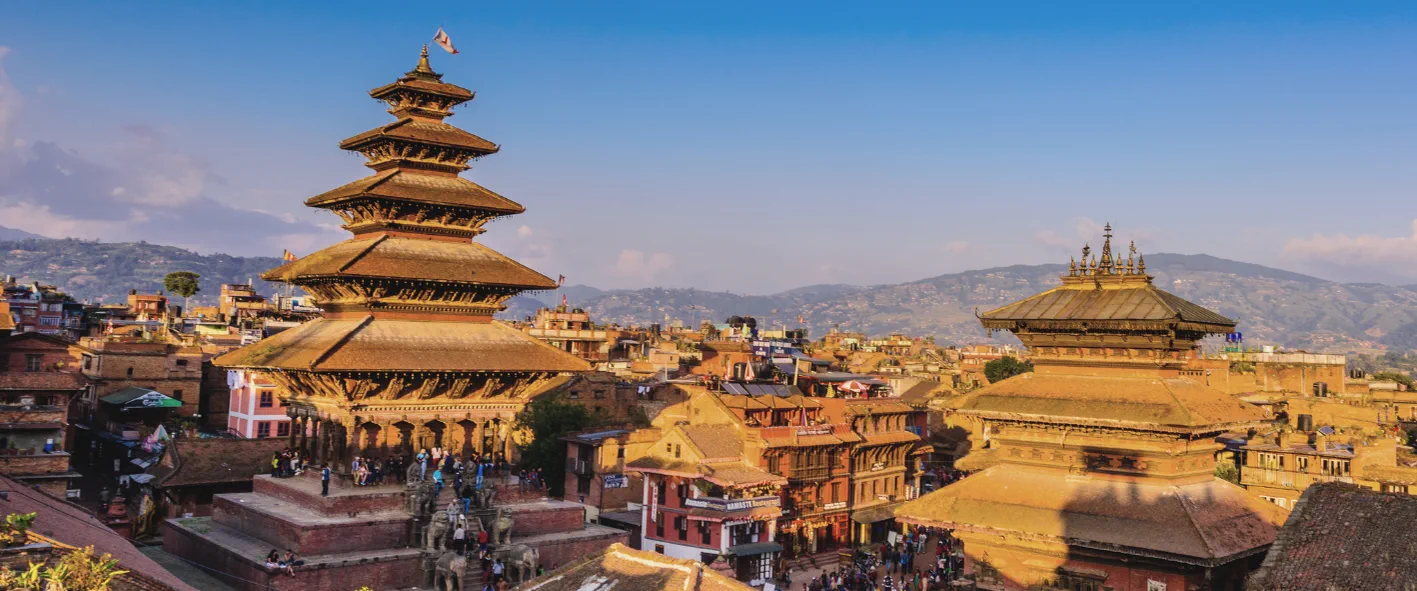
The Kathmandu Valley holds more UNESCO-listed monuments per square kilometre than anywhere on earth — most of them unmarked, unlabelled, and entirely empty at seven in the morning. We pair you with an architect who grew up in Patan and spent fifteen years documenting the valley's Newari heritage buildings. She takes you through the back courtyards of Bhaktapur, the hidden sunken hiti water fountains of Lalitpur, and the kumari house in Kathmandu Durbar Square where the living goddess occasionally appears at the window.
This journey moves from Kathmandu through the jungle lowlands of Chitwan to the Khumbu Himalaya. October–November brings the clearest mountain skies of the year; March–May offers rhododendron in full bloom along the trekking routes.
Arrive into Tribhuvan International and transfer to a restored heritage hotel in Patan's old city. Morning walk with our architect contact through the hidden courtyards of Patan Durbar Square, followed by the bead sellers and brass-casters of Indra Chowk. Afternoon at Swayambhunath — the monkey temple — at sunset, when the resident monkeys descend and the prayer wheels turn.
Morning flight to Bharatpur and transfer into the jungle. Private elephant-back dawn patrol on day three, followed by a Rapti canoe float. Day four: jeep safari into the Sauraha buffer zone where tiger sightings are most frequent in the dry season, and a guided walk through the Tharu village at the park boundary.
Fly to Pokhara. Pre-dawn jeep to Sarangkot for the Annapurna sunrise, the entire massif lit gold before the valley below wakes. Afternoon lake kayak on Phewa Tal, the Fishtail peak reflected in the water. Day six: helicopter flight into the Annapurna Conservation Area — landing at Ghandruk village for a private lunch with a Gurung family before returning.
Helicopter from Kathmandu to Namche Bazaar. Night at altitude to acclimatise. Day eight: guided trek to Tengboche monastery, arriving for the afternoon puja. Day nine: the final approach to Everest Base Camp at 5,365 metres — the Khumbu Icefall enormous and grinding above the tent lines, the wind coming off the summit plume. Return by private helicopter to Kathmandu.
Last morning in the valley — a private cooking class with a Newari chef in her home kitchen in Bhaktapur, learning to make chatamari rice crêpes and yomari dumplings. Afternoon transfer to the airport, carrying the particular quality of tiredness that only mountains produce.
Tell us how high you want to go and how much silence you need, and we will build the Nepal journey that fits exactly that.
Begin your journey