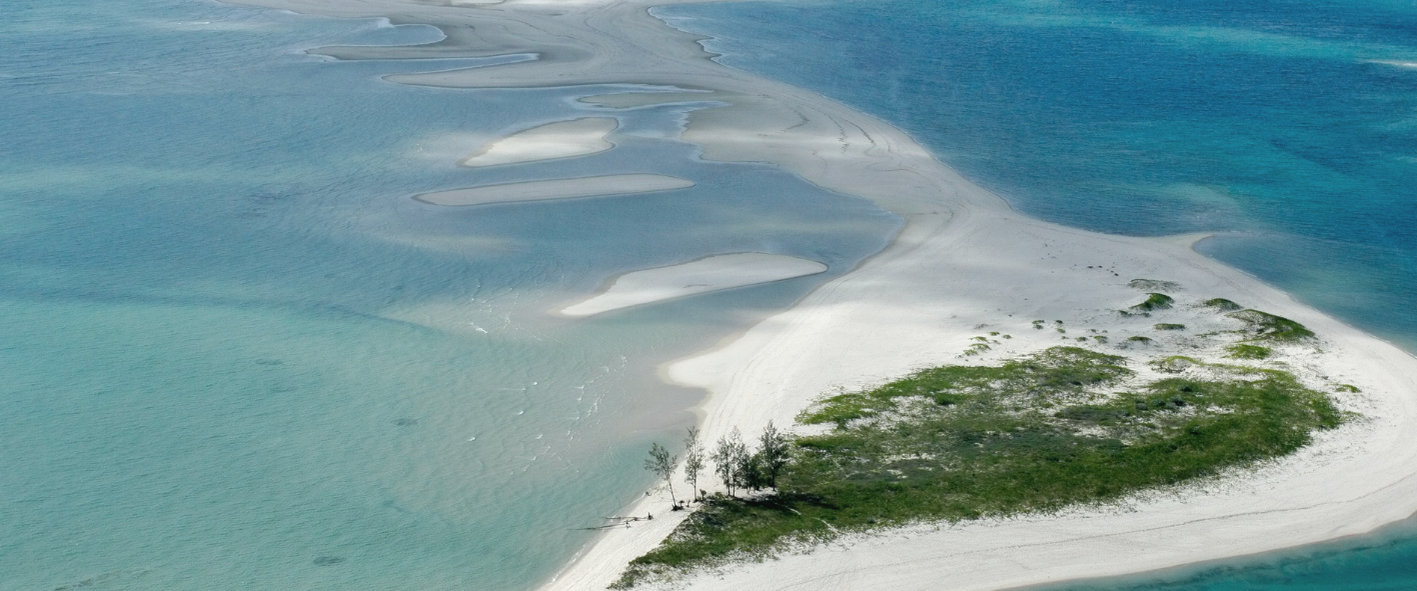
Mozambique has one of the longest coastlines in Africa and almost no mass tourism. The Bazaruto Archipelago holds the last viable dugong population on the continent, coral reefs that marine biologists still visit in disbelief, and private island camps where the only decision is which direction to swim.
Design your Mozambique journey →Mozambique's coastline runs 2,700 kilometres from the Tanzanian border to Maputo Bay, and for most of that distance it is backed by coconut palms, mangrove channels, and fishing villages whose Portuguese-inflected Swahili culture feels entirely its own. The Bazaruto Archipelago — five islands within a marine national park south of Vilanculos — protects seagrass meadows that still support a breeding population of dugong, the slow-grazing marine mammals once mistaken for mermaids by Portuguese sailors who had been at sea too long. The reefs here have unusually high hard coral coverage for the western Indian Ocean — largely because the archipelago's offshore position and national park status kept the trawlers out. North of the Zambezi delta, the Quirimbas Archipelago is older, quieter, and more Swahili in character: historic coral-rag buildings on Ibo Island, dhow-building workshops still active, and lodge concessions where the nearest other guests are several islands away. Mozambique is not trying to compete with the Maldives — it is simply itself.
The dugong survey that runs out of Bazaruto Lodge estimates fewer than 250 animals remaining in the archipelago — making every encounter both privileged and consequential. Snorkel excursions are led by marine researchers who locate the seagrass meadows where dugongs graze each morning, moving slowly with the current until the grey shape below resolves itself into a four-metre animal grazing like a slow-motion cow. The same shallow water holds large honeycomb stingrays, eagle rays, and green turtles. A private dhow charter ensures your snorkel party is small and your time on the water is unhurried.
Tofo, on the mainland coast south of Inhambane, sits above a deep oceanic trench that channels nutrient-rich upwellings close to shore — which is why whale sharks and manta rays aggregate here year-round in numbers that make Tofo one of the world's most reliable whale shark destinations. The Marine Megafauna Foundation has been conducting individual identification surveys here since 2005; joining a research swim means your encounter contributes to a longitudinal study of the same animals returning season after season. October to February brings the highest concentrations; the mantas peak from May to November.
Ibo Island in the northern Quirimbas has been inhabited since the 10th century and served as a major Arab and Portuguese trading post; its crumbling stone buildings and three Portuguese forts contain four centuries of commercial history that the jungle is quietly reclaiming. The silversmiths of Ibo work with the same tools and techniques brought from Muscat in the 18th century. A chartered traditional dhow sails the archipelago's channels between visits — the cook prepares Mozambican peri-peri prawns on the deck while you cross water so clear you can read the sandy bottom twelve metres below.
This journey combines the wild marine wealth of Bazaruto in the south with the Swahili heritage and remote island solitude of the Quirimbas in the north. Best travelled April to November, with peak marine encounters at Bazaruto from July to October and Tofo whale sharks at their most reliable from October to February.
Maputo deserves more time than a transit stop allows; its art deco and modernist architecture, the Central Market's fresh shellfish, and the Nucleo de Arte gallery represent a city with a genuine creative identity. A night here before the internal flight north sets the journey in a Mozambican context.
Three days on Benguerra or Santa Carolina island establish the rhythm of the archipelago: a dawn dhow to the seagrass beds for dugong, a snorkelling session on the Two Mile reef over staghorn and table corals, a walk to the inland freshwater lakes on Bazaruto Island where flamingos feed, and evenings on the beach eating freshly caught crayfish over a fire. The sandbar that connects islands at spring low tide is worth the 5am alarm.
A charter flight to Inhambane and a short transfer to Tofo. Two full days in the water with the whale shark research team — morning swims are typically two to three hours long and encounters with individuals up to twelve metres are routine between October and January. A second dive or snorkel on Manta Reef produces the manta rays that also aggregate above the trench for cleaning station sessions.
Flight north to Pemba, then a short hop to Ibo Island. Two days in the Quirimbas move between the silversmiths' workshops, the rooftop of Fort São João at sunset, and the dhow charter that takes you to an uninhabited sandbar island for a beach lunch. The visibility in Quirimbas waters regularly exceeds thirty metres; the reef fish density is extraordinary by any Indian Ocean standard.
The furthest northern lodges in the Quirimbas concession area operate with four to eight guests maximum and no day visitors permitted. A final two nights here — kayaking to mangrove channels, fishing with local crews, watching the Milky Way from the beach — establish the quiet that makes the return to ordinary life feel, temporarily, like a slight injustice. Return via Pemba to Johannesburg or Nairobi for onward connections.
Mozambique's best experiences require local knowledge and advance planning — we hold the relationships with the marine researchers, the dhow captains, and the island managers who make it real.
Begin your journey