inspiring travel
Berlin gallery interior with large format contemporary art and industrial light coming through high windows
Central Europe · Germany

A country that builds things
to last, and to surprise

Germany is misread by those who expect it to be obvious. Berlin's most interesting art is in private apartments, not public museums. The Rhine's best Riesling is made by producers who have no marketing budget and no interest in acquiring one. We know where to find both.

Design your Germany journey →
Scroll

Germany rewards methodical attention — which is, appropriately, a German quality. Berlin's private art scene operates entirely outside the gallery system: collectors who have spent thirty years acquiring work now open their apartments and former industrial spaces to a small number of trusted visitors, and the conversations that happen in those rooms have nothing to do with the art market as it is usually discussed. The Rheingau and Mosel are not places for wine tourism in any conventional sense — the producers who make the wines worth drinking are farmers first, and the harvest in October is a working event, not a performance. The Elbphilharmonie in Hamburg, which took seventeen years and 789 million euros to build, is best understood not at a concert but at a rehearsal — when the acoustics are being tested rather than displayed, and the building reveals what it is actually for. And the Black Forest, which became a cliché before anyone currently alive was born, contains private estates that have been farming, distilling and hosting since the 18th century, entirely without publicity.

Signature experiences

How we design
your Germany

Berlin private collector space with contemporary art installations in a converted factory loft
Berlin · Art

Private collector spaces — not public galleries

Berlin's best art is not in the Hamburger Bahnhof or the Nationalgalerie. It is in the Mitte apartment of a collector who started buying East German work in 1993, in the Kreuzberg loft of a dealer who represents twelve artists working in photography and installation, and in the Charlottenburg townhouse of a family that has been collecting German Expressionism since the 1930s. We arrange private visits to three collector spaces across two days, with the collectors present to explain the decisions behind each acquisition.

Rhine valley Riesling harvest in October with morning mist over steep slate vineyard terraces at Rüdesheim
Rheingau · Wine

Rhine harvest with a Riesling producer

The Rüdesheim and Rüdesheimer Berg sites produce Riesling from slate slopes that reach 60-degree gradients — harvested entirely by hand because no machine can operate on the incline. We arrange a working harvest visit in October with a small producer in Rüdesheim: walking the rows during the Spätlese pick, understanding why Germany's finest white wines carry their acidity for fifty years, and a cellar tasting of vintages going back to the year the producer's father took over the estate. This is not a wine tour. It is an argument for terroir as a form of memory.

Hamburg Elbphilharmonie concert hall interior during an orchestral rehearsal with natural light from the curved wave roof
Hamburg · Music

Elbphilharmonie rehearsal access

The Elbphilharmonie's main hall, designed by Herzog & de Meuron with an acoustic consultant who spent years modelling the sound of a vineyard slope, seats 2,100 people in a configuration where no seat is more than 30 metres from the conductor. A concert in the hall is a significant experience. A rehearsal — arranged through a contact in the NDR Elbphilharmonie Orchester's administration — is a different one: the hall at low occupancy, the musicians working through problems in the music, the acoustic architecture audible in its corrective function.

A suggested journey

11 days
from the capital to the forest's edge

A journey from Berlin through Hamburg and the Rheingau to Bavaria and the Black Forest. Best in October for the harvest and the forest colours, though Berlin is as compelling in January as it is in July.

Day 1–3

Berlin

Three days in Berlin. Private collector gallery visits across Mitte, Kreuzberg and Charlottenburg. A morning at the Neues Museum with an archaeologist who specialises in the Nefertiti bust's contested return. Dinner at a Prenzlauer Berg restaurant that operates as a private members' supper club — open three nights a week, no walk-ins. A late evening in the Berghain neighbourhood, seen through the eyes of a Berlin urbanist who has documented the city's post-unification transformation.

Day 4–5

Hamburg

Transfer to Hamburg. Elbphilharmonie rehearsal access in the morning. Afternoon in the Speicherstadt warehouse district with an architect who worked on the HafenCity redevelopment. Evening at a private fish restaurant in Blankenese where the chef sources exclusively from North Sea day-boat fishermen — a menu that changes twice daily with the tides.

Day 6–7

Rheingau & Rhine

Train to the Rheingau. Two nights at a privately owned Weingut guest house above Rüdesheim. Working harvest visit to a Riesling producer — the slate slopes, the hand-picking, the cellar tasting with library vintages. A boat journey down the Upper Middle Rhine Gorge, past the Lorelei, to understand why this particular combination of water, light and rock face produces this particular wine.

Day 8–9

Bavaria — Schloss stay

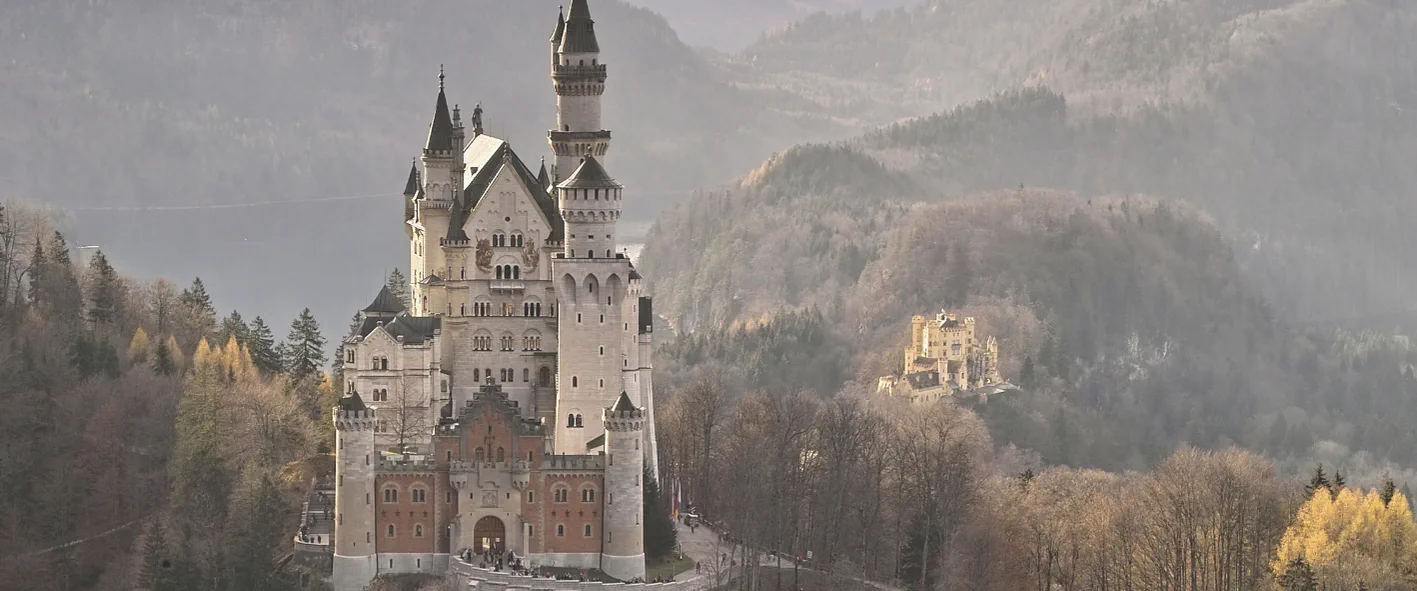
Transfer south to Bavaria. Two nights at a Schlosshotel in the Allgäu — a castle that has been converted into a private hotel while retaining the character of a working estate. Private fly-fishing on the Lech river with an Allgäu guide. An afternoon in Füssen to understand the logic of the Neuschwanstein project as a 19th-century political statement rather than a fairy-tale folly.

Day 10–11

Black Forest

Transfer west to the Black Forest. Two nights at a private estate near Triberg that has been producing Kirschwasser since 1748 — the distillery is operational, the cellar is accessible, and the family who runs it regards hospitality as a serious matter of regional pride. A morning walk through the Wutachschlucht gorge with a local botanist. Return via Freiburg im Breisgau and its Saturday farmers' market.

Your Germany story
begins here.

Germany's best experiences are not labelled — they are built, distilled and performed by people who have been doing it for generations and see no reason to explain themselves to strangers.

Begin your journey