inspiring travel
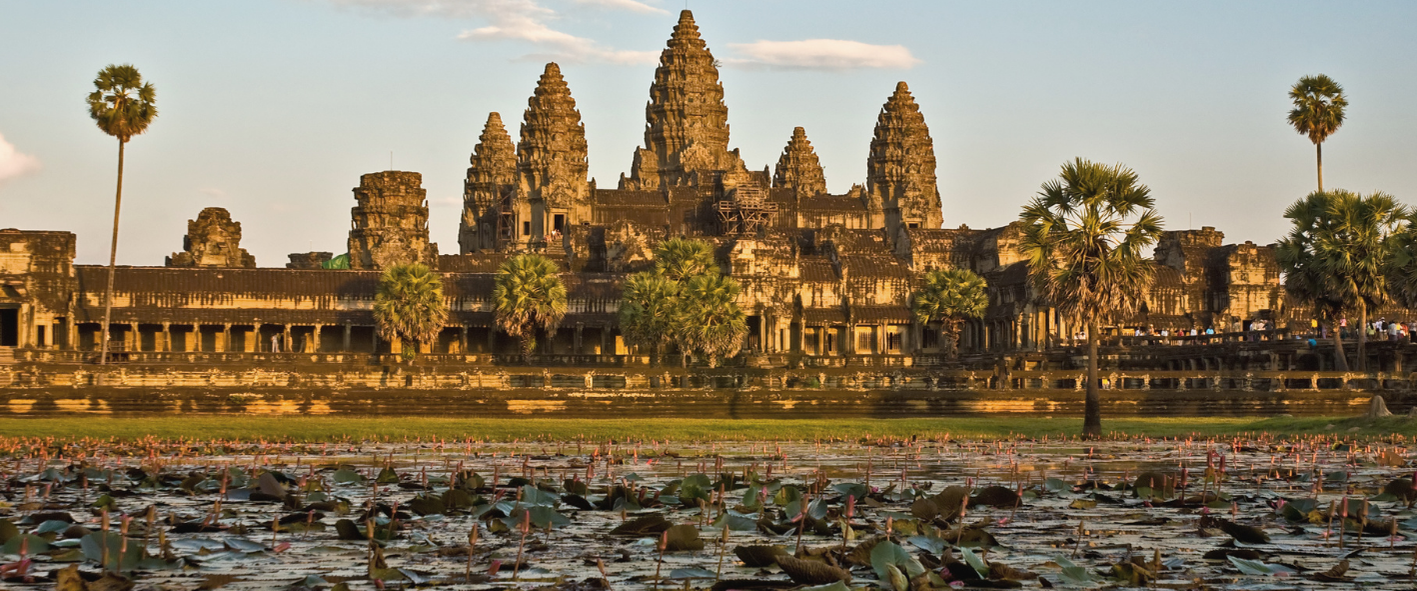
Angkor Wat's central towers reflected in the lotus pond at dawn before any visitors arrive
Southeast Asia · Cambodia

Temples that outlasted empires,
seen before the world wakes up

Cambodia holds the largest religious monument on earth and one of the most quietly resilient people anywhere. We design journeys that arrive at Angkor before the tour buses, that follow a food revival in Phnom Penh that the world is only beginning to notice, and that end on a Gulf island where the only sound is the sea.

Design your Cambodia journey →
Scroll

Angkor is the reason most people come to Cambodia, and it justifies every expectation — but only if you arrive correctly. The five o'clock walk to the western causeway in complete darkness, the water in the reflection pool perfectly still, the first light touching the upper towers before the sky is fully light — that moment belongs to very few visitors per year, and we make sure our travellers are among them. The archaeologist we work with has spent fifteen seasons excavating at Preah Khan and Banteay Srei, and he treats the temple reliefs as texts rather than decoration: the Churning of the Ocean of Milk, the Mahabharata battle scenes, the female deities of Angkor Thom who have no names in any Western reference. He reads the walls the way a musician reads a score, and the temples change meaning as he speaks. Beyond Angkor, Cambodia is a country in the middle of discovering itself again — Phnom Penh's restaurant scene has produced a generation of chefs cooking Khmer flavours with formal precision, and the islands of the Gulf of Thailand remain, for now, accessible without crowds.

Signature experiences

How we design
your Cambodia

Angkor Wat pre-dawn access with a private archaeologist guide reading the gallery reliefs
Heritage & Archaeology

Angkor at Dawn — Private Archaeologist Guide

The Angkor Archaeological Park opens at five in the morning, and the first hour belongs entirely to monks, maintenance workers, and StoryTailor guests. We arrange private access with an archaeologist who has worked the site for over a decade — beginning at the western causeway of Angkor Wat in darkness, moving to the Bayon's face towers as the light changes from grey to gold, and finishing at the jungle-swallowed ruins of Ta Prohm before the day-tour operators arrive with their queues. The temples he knows are not the ones in the brochures.

Tonlé Sap floating village at golden hour with stilted homes reflected in the lake water
River & Village Life

Tonlé Sap Floating Villages by Private Boat

The Tonlé Sap is the largest freshwater lake in Southeast Asia, and in the wet season it quadruples in size, swallowing the forest and floating entire villages off the ground. We charter a private wooden boat from Chong Khneas and navigate to the Vietnamese fishing community of Kompong Luong — a village of fifteen hundred people, all living on water, with a floating school, a floating petrol station, and a floating basketball court. The sunset from the lake, with the flooded forest behind the village, is unlike anything else in the region.

Phnom Penh restaurant serving elevated Khmer cuisine with palm sugar and kampot pepper
Culinary Revival

Phnom Penh's New Khmer Kitchen

A generation of Cambodian chefs trained abroad are returning to Phnom Penh and cooking the food their grandmothers described — the recipes nearly lost during the Khmer Rouge years, reconstructed from memory and oral history. We arrange a private dinner at one of these restaurants, followed by a morning at the Psah Thmei central market with the chef who sources her ingredients there, learning to identify the herbs and fermented fish pastes that are the architecture of Khmer flavour. Kampot pepper, picked green and dried on the vine, changes how you think about seasoning permanently.

A suggested journey

9 days
temples, river, and open sea

This route moves from Siem Reap through Phnom Penh and out to the coast. November to March is the dry season — ideal for Angkor's stone work and the Gulf islands alike.

Days 1–3

Siem Reap — Angkor Archaeological Park

Arrive into Siem Reap and transfer to a colonial-era hotel in the French Quarter. Three mornings at Angkor with our archaeologist guide — day one at Angkor Wat and Angkor Thom, day two at the jungle temples of Preah Khan and Neak Pean, day three at the pink sandstone of Banteay Srei, an hour from the main complex and visited by a fraction of the crowds. Afternoons at leisure in the Pub Street area's better restaurants, and a sunset cocktail on the roof of a restored French shophouse.

Day 4

Tonlé Sap Lake

Full day on the Tonlé Sap by private boat. Morning departure from Chong Khneas, navigating through the flooded forest to Kompong Luong. Private lunch on the water prepared by a floating-village cook. Return in the late afternoon as the light goes golden over the lake and the stilted houses cast long shadows across the surface.

Days 5–6

Phnom Penh — Capital & Culinary Revival

Fly south to Phnom Penh. Morning at the National Museum's Khmer sculpture collection, the finest in the world — followed by a walk along the Royal Palace waterfront with a guide who puts the twentieth century in honest context. Evening private dinner at a New Khmer restaurant, then a post-dinner walk through the riverside night market. Day six: Psah Thmei morning market with the chef, followed by a tuk-tuk tour of the French colonial architecture that survived the war years.

Days 7–9

Koh Rong Island

Morning flight to Sihanoukville and a private speedboat to Koh Rong — an island of white sand beaches and phosphorescent water that the development pressure of the mainland has not yet reached in full. Three nights at a small beach property with no pool and no entertainment programme — just the sea, kayaks, and a kitchen that cooks the morning's catch. Bioluminescence swimming after dark on the second night, when the plankton blooms.

Kep Extension

Kep — Temple Hiking & Crab Market

For those with an extra two days, Kep on the southern coast offers the Phnom Kamchay cave temple hike — a monastery carved into a limestone mountain — and the Kep Crab Market where Kampot pepper crab is cooked in woks over wood fire within sight of the boats that caught it. A town that was abandoned for thirty years and is only now finding its way back to itself.

Your Cambodia story
begins here.

The temples, the lake, the coast, and the kitchens — we design Cambodia so that every day feels like a discovery rather than a checkbox.

Begin your journey